Does My Block Wall Count as a Pool Fence? A Self-Check and the Cheapest Compliant Fix
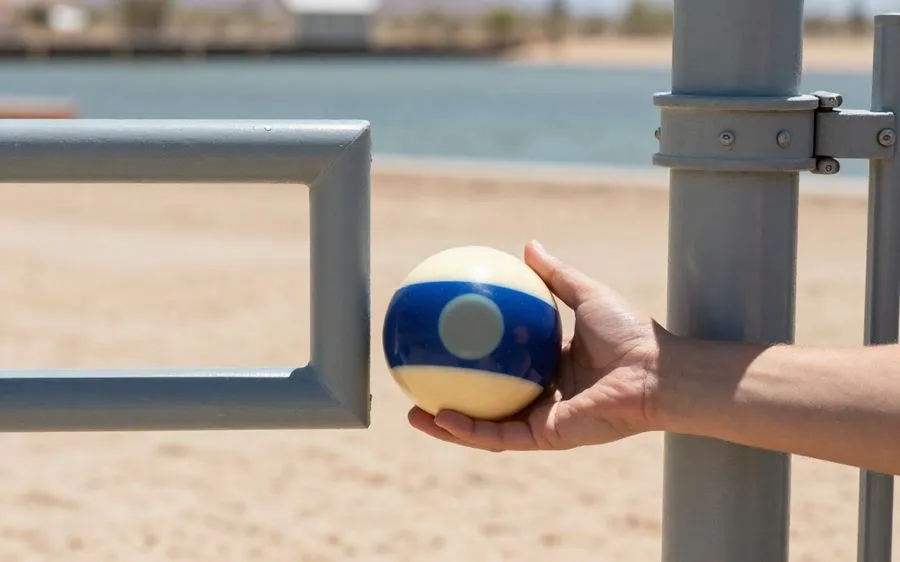
Before you buy a mesh fence, walk the yard you already have. Take a tape measure, a four-inch ball, and enough time to open every gate from more than one position. A block wall can serve as a pool barrier. The material is not the point. The enclosure has to meet the performance requirements, and one weak gate can undo a solid 6 ft wall.
This article does not certify compliance. Each check below tells you whether a measured feature meets that requirement or does not meet it. Confirm the enclosure as a whole with your city or a certified inspector. A barrier is one layer of protection, not a replacement for supervision.
Yes, a wall can be the barrier - the rule is about performance, not material
A perimeter block wall, an interior fence, a building wall, or a combination of them can be the barrier if it meets the requirement each check comes from. That is the useful answer for an owner who already has masonry around the yard. You are not required to replace a qualifying wall just because somebody sells removable mesh fencing.
In metro Phoenix, the wall itself often clears the first visual test. It is commonly 6 ft tall, which is above the 5 ft exterior-side threshold. Then the close inspection finds the real issue: a gate that no longer latches, a low gap below it, an air-conditioning pad against the wall, or a sliding door that opens straight onto the deck.
I have seen homeowners price an entire new barrier before checking a hinge. That is backwards. Measure the existing enclosure first, identify the failing link, and only then decide whether new barrier work is warranted.
Three ways to enclose a pool
| Approach | When it applies | What it still requires |
|---|---|---|
| Perimeter wall as the barrier | The wall and gates surround the pool area | The wall, openings, gate, clearance, climbability, and water-edge distance must meet the applicable requirements. |
| Interior barrier between house and pool | The perimeter wall is too short, gapped, or costly to modify | The interior barrier must meet the applicable barrier specifications and protect the pool from the house side. |
| House wall as one side with door and window protection | A house wall forms part of the enclosure | Every relevant door and window needs the protection described in the requirement each check comes from. |
The seven checks, with a tape measure and a tennis ball
Start on the side of the wall that faces away from the pool. That is where the height is measured. A 60 in reading meets the 5 ft height requirement in A.R.S. 36-1681(B)(1); a shorter reading does not meet that requirement, even if the pool-side grade looks better. Write down the lowest measurement instead of trusting the average.
Next comes the simple ball test. Carry a ball that is actually 4 in across around every opening: under the gate, at the hinge side, through decorative block openings, and at transitions where a fence meets masonry. If the ball goes through, that opening does not meet the requirement in A.R.S. 36-1681(B)(2) and CPSC publication 362.
Check ground clearance on the side facing away from the water. About 2 in is the maximum described by CPSC publication 362 and the City of Phoenix pool-barrier requirements. Soil washes out under gates in monsoon weather, and a low corner can change over one season. Do not measure only the neat center of the opening.
Now look up and around. Horizontal members need to be at least 45 in apart, or they need to be on the pool side with openings no larger than 1.75 in, under A.R.S. 36-1681(B)(2). The practical question is whether the detail gives a child a usable sequence of footholds. A flat-topped planter, stored pavers, pool equipment, and a raised AC pad are part of that inspection.
The gate gets its own deliberate test. Open it a little, halfway, and nearly all the way. It needs to self-close, self-latch, and open outward under A.R.S. 36-1681(B)(3). Its latch needs to be at least 54 in high unless the release is shielded on the pool side, or the gate uses a padlock, key, electric, or integral combination device. A lock that is merely kept locked by habit is not the same thing as a self-latching gate.
Measure from the barrier to the water’s edge too. The minimum is 20 in under A.R.S. 36-1681(B)(5). Finally, if the house makes up one side of the enclosure, check every door and window that creates an opening into the pool area. One unprotected opening means that part of the enclosure does not meet its applicable requirement.
| Check | What the requirement is | How to measure it | What passes | Cheapest fix if it fails | Citation |
|---|---|---|---|---|---|
| Exterior wall height | At least 5 ft, or 60 in | Measure the lowest exterior-side height | 60 in or more | Interior barrier or raise the wall | A.R.S. 36-1681(B)(1); rule |
| Openings | No opening passes a 4-in sphere | Try a 4-in ball at every gap | Ball does not pass | Correct the gap or add an interior barrier | A.R.S. 36-1681(B)(2), CPSC pub. 362; rule |
| Ground clearance | About 2 in maximum away from the pool | Measure beneath the wall and gate | No opening over about 2 in | Restore grade or correct the gap | CPSC pub. 362, City of Phoenix; rule |
| Horizontal details | At least 45 in apart, or pool-side with openings at most 1.75 in | Measure member spacing and openings | Detail meets one of those conditions | Remove the climbable condition or use an interior barrier | A.R.S. 36-1681(B)(2); rule |
| Gate | Self-closing, self-latching, and opening outward | Test it from several open positions | It closes, latches, and swings outward | Spring or torque hinge plus correct latch | A.R.S. 36-1681(B)(3); rule |
| Latch and water distance | Latch at least 54 in unless an allowed alternative; barrier at least 20 in from water | Measure latch and nearest water edge | Both measurements meet their requirements | Move or change the latch; assess layout with city | A.R.S. 36-1681(B)(3), (B)(5); rule |
| House openings | Doors and windows need the required protection | Check each opening into the pool area | All relevant openings have the required protection | Add the applicable door or window protection | A.R.S. 36-1681(C)(3); rule |
Printable seven-point self-check
Take this outside and mark the actual result, not the result you expect to get.
- Exterior wall height: lowest exterior-side measurement is at least 60 in.
- Openings: a 4-in ball does not pass through any gap, including hinge and gate gaps.
- Ground clearance: the exterior-side clearance is no more than about 2 in.
- Horizontal detailing and nearby footholds: member spacing meets the requirement and nothing climbable helps someone over.
- Gate: it self-closes, self-latches, opens outward, and has a latch at the required height or an allowed alternative.
- Water-edge distance: the barrier is at least 20 in from the water’s edge.
- House side: each relevant pool door and window has the required protection.
Keep the measurements with the checklist. If you call an inspector or a contractor, “the gate gap is 4 1/2 in” is useful; “it seems wide” is not.
Try the seven-point self-check
Select the result of each measurement. This tool reports individual requirements only; it does not certify the enclosure.
The gate is the usual failure - and the cheapest fix
Inspectors and installers consistently point to gates as the trouble spot, although I would not turn that pattern into a made-up percentage. Gates move. Hinges loosen in heat, settling changes the strike alignment, and someone props a gate open because carrying pool supplies through it is annoying. A wall does none of that.
I looked at one East Valley yard with a 6 ft wall and no opening that passed the ball test. Years earlier, the gate had been rehung to swing inward for clearance. Nobody living there remembered why. It was still the feature that defeated the enclosure because the gate needed to open outward. The owner did not need a new perimeter fence; the gate needed to be addressed.
Test self-closing from several points, not just from a few inches open. A hinge that closes from almost shut but stalls from halfway does not meet the stated gate requirement. Watch the latch engage without a hand guiding it. Then measure the release height. A release at least 54 in high meets that part of the requirement; a shielded pool-side release can also work. A padlock, key, electric, or integral combination device can be at any height under the stated alternative in A.R.S. 36-1681(B)(3).
For a gate-only problem, the usual compliant approach is a spring or torque hinge combined with a self-latching lock at the required height. It is a hardware correction, not a claim about any brand or product. Before altering an approved barrier, ask whether your fix needs a permit and an inspection. The small opening at the side yard deserves the same scrutiny as the main entrance: see the small gate people forget is part of the enclosure.
Fix decision tree
- Which check failed? Write down the measurement first.
- Gate only: correct the hinge, outward swing, and latching arrangement. Verify the modified gate with the city.
- Wall too short or a gap passes the ball: compare a compliant interior barrier with raising the wall. Verify the selected barrier layout with the city.
- A nearby object makes the wall climbable: move the object away from the barrier, then recheck the path. Verify the resulting condition with the city.
- A house door or window is unprotected: use the applicable door or window protection, then verify every opening with the city.
- More than one condition fails: do not assume one product solves all of them. Take the measurement list to a certified building inspector or city plan-review office.
The climbable object nobody counts
The wall may be 6 ft tall until a pump, filter, raised AC pad, planter, or stack of pavers makes it effectively shorter. That is a hard conversation because the wall did not change. The route over it did.
Walk the exterior and pool sides with a child’s likely route in mind. A piece of equipment close enough to step onto can defeat an otherwise good wall. Relocating it is often the least expensive compliance work in a yard because you are correcting the access point, not rebuilding masonry. Do not use a cosmetic screen as a substitute for checking the climb path.
Red flags to catch before somebody sells you a fence
- A gate that stays propped open while people are home.
- A “compliance check” that gives no measurement or named requirement.
- A solar or winter cover described as if it were a barrier.
- A mesh-fence quote made before anyone asks how the existing gate closes.
Only a key-switch motorized cover meeting the stated cover standard is a listed alternative, and only in the house-to-pool situation described in the requirement each check comes from. A regular cover is not a substitute for the barrier.
When the wall itself is the problem
Three wall conditions change the job: the exterior-side height is under 5 ft, an opening passes the 4-in sphere, or the horizontal detailing creates a climbable path. In each case, the current wall does not meet that particular requirement. Do not try to repair the answer with wishful measuring from the nicer side of the yard.
Raising a long block wall can be the right solution, but it is not automatically the economical one. An interior barrier between the house and pool can protect the pool without changing the entire perimeter, provided that barrier meets the applicable specifications. That is not a second-class approach. It is often the cleaner answer when only one stretch of the perimeter is troublesome.
Removable mesh is one possible interior-barrier category, and ASTM F2286 is the applicable product standard named in the brief. A commercial, undated source gives only a rough installed signal of about $15-$25 per linear foot. Treat that as a starting signal, not a bid or a settled market figure. For actual project figures, see what raising a wall actually costs and compare the scope against an interior barrier.
Do not remove an approved barrier because the household has aged out of young children. The City of Phoenix pool-barrier requirements say an approved barrier remains for the life of the pool. Check the local rule before touching an existing approved barrier.
When your house is one side
A sliding door onto the deck is not a harmless exception. When the house forms one side of the enclosure, A.R.S. 36-1681(C)(3) requires protection for those openings. In practice, relevant doors need to self-latch. Egress windows need a latch at least 54 in high. Other relevant windows need a screen, a keyed restriction to a 4-in opening, or a latch at least 54 in high. Read the requirement each check comes from alongside the actual openings in your home.
A listed door alarm is another protection route described in CPSC publication 362 and UL 2017 section 77. The stated alarm specification is at least 30 seconds of sound within 7 seconds, at least 85 dBA at 10 ft, an adult bypass of no more than 15 seconds, and a reset at least 54 in high. Do not call an alarm adequate merely because it makes noise; the listed specification matters.
Check pet doors and doggie doors in the pool-side doors as well. The local restrictions named in the rule apply even where a homeowner thinks a pet opening is too small to matter. One unguarded opening can leave the house side of the enclosure short of its requirement. This is a good point to bring measured opening sizes to city plan review rather than guessing.
The fix ladder, cheapest first
Fix the failing link, not the wall. That rule keeps a 20-minute hardware problem from becoming a perimeter project. The relative order below is not a price list, and it can change when access, existing construction, or permit work changes the scope.
| Option | What it fixes | Relative cost | Notes |
|---|---|---|---|
| Gate hardware | A gate that will not self-close, self-latch, or open outward | Usually the first place to investigate | Spring or torque hinge plus a self-latching lock at the required height is a compliant approach. |
| Relocate a climbable object | Equipment, planters, pavers, or a raised pad that creates a foothold | Often minimal work | Recheck the route after moving the object. |
| Door and window protection | An unprotected house-side opening | Lower than a new perimeter in many layouts | Match the protection to the opening and the stated requirement. |
| Interior mesh barrier | A wall that cannot reasonably be corrected | More than hardware; less than some long-wall work | ASTM F2286 is the applicable product standard. The $15-$25 per foot signal is commercial and undated. |
| Raise the wall | Exterior height, gaps, or detailing that cannot be corrected another way | Often the largest scope | Use what raising a wall actually costs for cost context. |
| Motorized cover | The specific house-to-pool alternative | Situation-specific | Only the key-switch motorized type meeting the cover standard is named as an alternative. |
A qualified interior barrier can be the safer purchase when the perimeter wall is genuinely unsuitable. A mesh quote is not proof that you need one. If the gate is the only measured failure, start there and confirm the result with the city or a certified inspector.
When to stop and call someone
Stop the self-check when you cannot tell which side of a detail controls the measurement, when a house opening has an unclear protection arrangement, or when more than one barrier condition conflicts. That is a good use of a certified building inspector. Bring your checklist and photographs of the measured spots.
Call the city plan-review office before altering, repairing, removing, or replacing an approved barrier. The City of Phoenix pool-barrier requirements say that such work needs a permit, and inspection is part of the question. This article cannot tell you the permit procedure; confirm whether your fix needs a permit and an inspection for the work you are considering.
At a property sale, do not accept a casual contractor opinion as a final answer. A measured inspection and city confirmation are worth more than a rushed assurance tied to a fence quote.
Common questions about an existing wall and pool gate
My wall is 6 ft - is that enough on its own?
On height, yes: 6 ft is above the 5 ft exterior-side requirement. The enclosure is judged as a whole, so the gate, ground clearance, every opening, water-edge distance, nearby climbable objects, and any house-side opening still need their own checks. A tall wall does not make an inward-swinging or non-latching gate pass.
What is the four-inch sphere test, in practice?
Use a round object that is 4 in across and try to pass it through every opening around the enclosure. Include the gap under the gate, the hinge side, decorative openings, and transitions to another barrier. If it passes through, that opening does not meet the requirement in A.R.S. 36-1681(B)(2) and CPSC publication 362.
My pool gate does not close by itself. What is the cheapest fix?
Start with a spring or torque hinge and a self-latching lock at the required height, or an allowed padlock or keyed device. This is usually a smaller scope than new fence work, but it has to make the gate self-close, self-latch, and open outward. Confirm whether altering the approved barrier triggers a permit and inspection where you live.
The installer says I need a four-sided mesh fence. Do I?
Not if the existing wall meets the applicable requirements and only the gate fails. A compliant interior mesh barrier is a legitimate answer when a wall is too short, gapped, or otherwise cannot be made to meet its requirement. Ask the installer to identify the failed measurement before accepting a full-barrier quote.
No young children live here. Can I take the barrier down?
Do not remove it based on that fact alone. A state exemption may be relevant in some situations, but a stricter city rule can control, and Phoenix requires an approved barrier to remain for the life of the pool. Ask the city before altering or removing the barrier.
Do I need a permit to fix the gate or raise the wall?
Altering an approved barrier generally needs a permit and an inspection under the City of Phoenix pool-barrier requirements. The exact trigger depends on the work and city, so confirm it before you begin. A hardware change may feel minor, but approved-barrier work is not the place to assume.
Take the printable checklist outside, complete all seven checks, and fix the cheapest failing link first. Phoenix Fence Guide does not install barriers, sell products, or hold a contractor license; it is here to help you ask for a measurable answer before you buy.
Sources
- A.R.S. 36-1681, checked July 29, 2026: barrier height, openings, gate, water-edge, and house-opening requirements.
- CPSC Safety Barrier Guidelines for Residential Pools, publication 362: 4-in sphere, ground-clearance, and door-alarm guidance.
- City of Phoenix Pool Barriers, 2024 ISPSC with amendments: ground clearance, approved-barrier retention, and alteration permit requirement.
- ASTM F2286: applicable product standard for removable mesh pool fencing.
- nmifence.com: commercial, undated rough mesh-install signal only, not a bid or verified market figure.
Last reviewed 2026-07-29. At each review, the listed thresholds are reread against the statute because a barrier check based on a superseded figure is worse than no check at all.
This page gives general safety and code-information guidance, not a compliance certification, legal advice, installation advice, or a substitute for city review. Every threshold above is drawn from the statute or city document and linked to the rule article, rather than paraphrased from an installer page. Do not treat a pool cover as a barrier except for the specific key-switch motorized house-to-pool alternative described in the rule. Confirm the complete enclosure with your city or a certified inspector.
Reviewed by Alma Reyes, ICC-certified residential building inspector
Read next in pool barriers
Arizona Pool Barrier Law: What A.R.S. 36-1681 Actually Requires (Height, Gate, Doors)
The Arizona pool barrier rule quoted from the statute: 5 ft height, gate hardware, house-wall options, exemptions, and the penalty installers get wrong.
Want a licensed contractor to call you back?
Leave a number and we pass it to a licensed Arizona contractor. We are not one, we do not bid on the work, and we do not sell your number on.
Request a callback
Send your number to [email protected] with the best time to call and one line about the project. It reaches a person, not an autoresponder, and the page you were reading travels with it so we know what you were pricing.
Advertiser disclosure: this page is free to read because a contractor may pay us for a lead that comes from it. That arrangement never changes what a page says. We publish no contractor names, no rankings and no reviews, and we say plainly when a project is not worth doing.