City Fence and Wall Rules in Metro Phoenix
Ten Valley jurisdictions set their own height caps and their own permit triggers, and the unincorporated county picks up the addresses people assume are inside a city. Find out which row is yours before you read anybody's number.
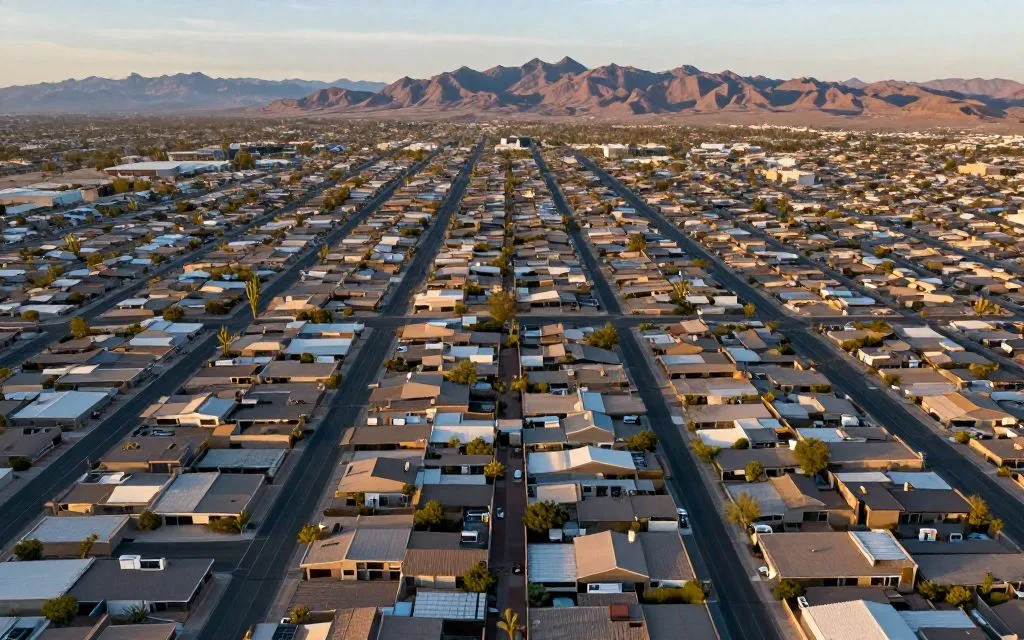
Which jurisdiction is actually yours
This is the first question, not a formality. Plenty of Valley addresses that read Phoenix, Mesa or Scottsdale on an envelope are not inside those cities at all: they sit in unincorporated Maricopa County, where the county permits the work and the county's own directive sets the engineering threshold. Start from the wrong row and everything below is wrong for you, cell by cell.
A mailing address does not settle it, and neither does the school district or the nearest fire station. The reliable test is a parcel lookup through the county assessor: enter the address, read the jurisdiction the parcel record names, and work from there. If the answer comes back as county rather than city, the county's rules apply directly and there is no city counter to call.
The second wrinkle is a project that straddles a line. A wall along a rear property line can answer to one jurisdiction on one side and another on the other, which is how owners find out that a height their neighbor was permitted for is not available to them.
Three layers apply everywhere in the Valley
Whatever the answer to that first question, three things hold across metro Phoenix, and they run in a fixed order.
Covenants come first. Four decades of Valley subdivisions were built under them, and the CC&Rs hand an architectural committee the last word on height, material, color and style. Get that approval in writing before any city application, because a covenant can force a change or a removal on a wall the city inspected and passed. Your city has no authority over the covenant and will not step into the argument. What the ARC wants to see, and in what order covers the paperwork.
The jurisdiction comes second, and this is the layer where the ten pages below stop agreeing with each other. Each city adopts its own edition of the building code with local amendments and sets its own trigger for when a permit becomes mandatory.
How filing works once you know your trigger walks the process end to end, and how height is measured, on a slope and at a corner covers the geometry that decides whether you are over the cap in the first place.
One regional rule sits above all ten. Maricopa County directive DD-5012-01, as revised 5/4/2026, requires plans sealed by an Arizona registered professional for walls over 7 feet where the block is 6 inches or thicker, and for retaining walls over 4 feet measured from the bottom of the footing to the top, or carrying a surcharge. Individual cities can be stricter and several are. For an unincorporated address the directive is not a backstop behind a city rule, it is the operative rule.
Nobody charges for the third layer, and it still gets skipped more often than the other two. Arizona 811, which longtime residents call Blue Stake, marks buried utilities free of charge, and state law requires notice at least two full working days before excavation. A footing trench is excavation. So is a post hole for a view fence.
One thing that is not a layer but decides who may do the work: contractor licensing through the Arizona Registrar of Contractors. Masonry falls under R-31, hardscape work under R-21 with its scope capped at walls of 6 feet and retaining walls of 3, pool barriers under B-5. The classification has to match the job in front of it, and hiring outside the licensing system gives up the state's recovery fund with it.
Where the cities actually differ
Front-yard height is the fastest way to see that there is no such thing as a metro Phoenix fence rule. Phoenix caps a front-yard fence at 40 inches under Zoning Ordinance Section 703.A. Mesa allows 3 feet 6 inches. Tempe allows 4 feet, and has the only front-yard rule in the Valley with a documented path upward, to 6 feet by use permit. Surprise caps a solid fence in the front setback at 2 feet, and Chandler and Glendale both sit at 3 feet. The Phoenix figure is the one that gets mangled: it is printed as 3 feet on contractor page after contractor page.
Side and rear runs cluster tighter, at 6 feet, but two towns break upward: Gilbert permits 8 feet on a side or rear property line under Land Development Code Section 4.109, and Tempe allows 8 feet on single-family lots. Chandler stops at 7 feet, a foot below both. Phoenix allows 8 feet where the lot abuts an arterial street, with a use permit.
The permit trigger is where the real divergence lives, and in three of these towns it is not a height ladder at all.
Mesa exempts fences up to 6 feet on single-residence zoning from a building permit. That is the exemption everyone quotes; the three named exceptions attached to it are the part nobody quotes: Desert Uplands land, a Historic Preservation overlay, and a public easement.
Scottsdale runs the metro's genuinely different gate. No permit is required up to 3 feet, yet a courtesy site-plan approval covering zoning and stormwater applies to any wall at any height, so in Scottsdale "no permit needed" and "nothing to file" are two different sentences.
Chandler requires a zoning clearance at any height and a building permit above 7 feet, or above 4 feet for a retaining wall, or wherever a fence sits on top of a retaining wall. Queen Creek requires a permit for every fence and wall with no height exemption surfaced at all, submitted on an approved standard detail or an engineer's drawing.
Gilbert exempts fences under 3 feet and, separately, bans barbed wire, razor wire and electric fencing outright under Municipal Code 42-110. Surprise carries the trap most likely to catch a reader of this site: adding height to an existing wall is prohibited there, which turns an ordinary extension project into a non-starter.
Two of the cities add their own pool layer on top of the state statute. Chandler requires an exterior barrier of at least 6 feet, taller than the state minimum, and Queen Creek codifies its barrier options in Ordinance 479-10. Both of those are headlines rather than the requirement. What A.R.S. 36-1681 itself requires carries the statute, and no page on this site will tell you a specific barrier complies.
What we could not confirm, and why the page says so
A jurisdiction table is only worth reading if it tells you which cells were verified and which were assumed. Four things on this hub are honestly open, and they stay open rather than getting filled in with a plausible number.
No permit fee dollar figure was confirmed for any of the eleven authorities. What is publishable is the basis: Phoenix charges on project valuation under its own code appendix, Scottsdale bills plan review per hour plus a per-linear-foot component, and the rest publish a schedule. The "$25 to $125 Arizona fence permit" range that circulates on aggregator sites is not tied to any city here and does not appear on this site.
Glendale's permit trigger comes from commercial sources rather than the city's own code, so its page publishes the height ladder and prints the permit position as unconfirmed. Queen Creek's height caps never surfaced in any official source, which the page states rather than borrowing a neighbor's figure. And the Phoenix numbers trace to a city summary revised 9/16/2013, which makes them the oldest citation chain in the set and the first thing here due for a re-check.
One gap did close. Peoria's row was the thinnest in the original pass and was later sourced from the city's own Zoning Ordinance, Sections 21-312 and 21-313, checked 7/2026.
The dated, cell-by-cell version of all of this, with each source and check date printed inside the row, is the jurisdiction grid. It is the reference artifact; the city pages below are the reasoning.
Before you build, in any of these cities
Six steps, in this order. The order is the point: three of them become expensive to redo if taken out of sequence.
- Confirm the jurisdiction by parcel lookup, before reading a single height figure.
- Find the trigger for your project, at your height, in your yard, on your lot type. A corner lot and a slope both change the answer.
- Get community approval in writing, with the drawing the committee approved attached to it.
- File with the city, or with the county if that is what step one returned, and confirm whether a separate zoning clearance applies on top of the building permit.
- Call Arizona 811 at least two full working days before anyone digs.
- Check the contractor's ROC classification against the scope, not against a logo on the truck.
Steps 3 and 4 are the ones people reverse, and the reversal is what generates the horror stories: a permitted, inspected, structurally sound wall that a committee then requires to come down.
Eleven authorities, side by side
Every row links to that jurisdiction's page. The county row has no page of its own, because it is an authority rather than a city; it links to the permit process guide instead.
| Jurisdiction | Who permits | Permit trigger | Front / side and rear cap | What is different here |
|---|---|---|---|---|
| Phoenix Fence, Wall and Gate Rules | City of Phoenix, Planning and Development | Above 3 feet | 40 in / 6 ft, 8 ft abutting an arterial | The 40-inch front cap that gets misquoted as 3 feet, plus named material prohibitions |
| Mesa Fence, Wall and Gate Rules | City of Mesa, Development and Sustainability | Exempt up to 6 ft on single-residence zoning | 3 ft 6 in / 6 ft | The famous 6-foot exemption, and its three exceptions |
| Scottsdale Fence, Wall and Gate Rules | City of Scottsdale, One Stop Shop | No permit up to 3 ft, courtesy approval for any wall | Varies by zoning district | Approval is required even where a permit is not |
| Chandler Fence, Wall and Gate Rules | City of Chandler, Development Services | Above 7 ft, retaining above 4 ft, or a fence on a retaining wall | 3 ft / 7 ft | Zoning clearance at any height, and a pool barrier taller than the state's |
| Gilbert Fence, Wall and Gate Rules | Town of Gilbert, Building Department | Exempt under 3 ft | 3 ft / 8 ft on the property line | The Valley's tallest side and rear line, and its most explicit material bans |
| Tempe Fence, Wall and Gate Rules | City of Tempe, Community Development | Above 7 ft | 4 ft, up to 6 ft by use permit / 8 ft | The only front-yard cap with a documented path upward |
| Glendale Fence, Wall and Gate Rules | City of Glendale, Building and Planning | Reported above 6 ft, not confirmed by city code | 3 ft / 6 ft, 8 ft under the Section 7.200 exception | A clean height ladder with an exception most readers never find |
| Surprise Fence, Wall and Gate Rules | City of Surprise, planning and zoning | Residential fences capped at 6 ft | 2 ft solid in the front setback / 6 ft, neither side above 8 ft | Adding height to an existing wall is prohibited outright |
| Queen Creek Fence, Wall and Gate Rules | Town of Queen Creek, Building Safety | Every fence and wall, with no height exemption | Not confirmed in official sources | The one town where height does not get you out of the permit |
| Peoria Fence, Wall and Gate Rules | City of Peoria, Development and Engineering | Per Zoning Ordinance Sec. 21-312 and 21-313 | Per the same sections, checked 7/2026 | Sourced from the city's own ordinance after the first pass came back empty |
| Unincorporated Maricopa County | Maricopa County Planning and Development | Per directive DD-5012-01 | County standards apply | No city counter, no city page: start with the permit process guide |
The full sourced grid.
Permit and Height Rules by Jurisdiction, Metro Phoenix holds all eleven authorities with the complete column set, including sight-triangle rules, fee basis, pool additions, code references and a verification flag on every cell that needs one.
Questions this hub answers
How do I tell whether my address is in the city or in unincorporated county?
Look up the parcel through the county assessor; the mailing address is not evidence. A Valley property can carry a city address and sit outside that city's limits, and for those the county permits the work under its own directive. Every other figure you look up depends on getting this one right.
Is there a single fence height limit for the whole metro?
No, and readers arrive with that assumption more often than any other. Front-yard caps here run from 2 feet for a solid fence in Surprise to 4 feet in Tempe, with Phoenix at 40 inches in between. Side and rear runs vary from 6 to 8 feet depending on the jurisdiction and the lot.
Which cities let me build a 6-foot wall without a permit?
Mesa exempts fences up to 6 feet on single-residence zoning, subject to three exceptions. Several other jurisdictions set their trigger above 6 feet, which produces the same practical result by a different route. Queen Creek requires a permit for everything regardless of height, and Scottsdale requires site-plan approval for any wall even when no permit applies.
What does a fence permit cost in these cities?
No dollar figure is printed here, because no city in this metro published one this site could confirm. What each authority charges on varies, as the section above sets out, and the only number worth having is the current schedule from the counter or the portal.
Do I still need HOA approval if my city does not require a permit?
Yes. The two gates are independent. A community can require changes or removal on a wall that needed no city permit at all, and the city will not intervene on your behalf.
How often are these rules re-checked?
Each row carries its own check date, and the grid states its refresh promise on the page. Codes get amended, fee schedules change and adopted code editions roll over, which is why every figure here is printed with a section reference and a date instead of as a bare number.
The rules summarized here are collected from each authority's published code and are dated at the row and the page. They are a starting point for a conversation with your city, not certified advice, and they change. Verify the current text with the jurisdiction before you build, obtain your community's written approval separately, and remember that this site performs no wall, fence or gate work of any kind. Reviewed by Alma Reyes, ICC-certified residential building inspector.
Want a licensed contractor to call you back?
Leave a number and we pass it to a licensed Arizona contractor. We are not one, we do not bid on the work, and we do not sell your number on.
Request a callback
Send your number to [email protected] with the best time to call and one line about the project. It reaches a person, not an autoresponder, and the page you were reading travels with it so we know what you were pricing.
Advertiser disclosure: this page is free to read because a contractor may pay us for a lead that comes from it. That arrangement never changes what a page says. We publish no contractor names, no rankings and no reviews, and we say plainly when a project is not worth doing.