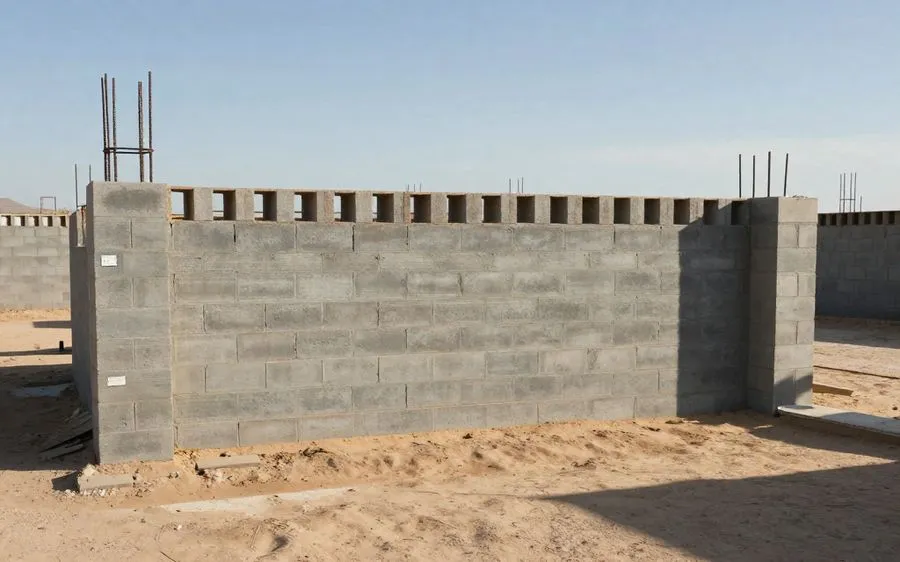
Block Wall Cost in Phoenix: Price Per Linear Foot, Per Course, and Line by Line
the price taken apart in the order a bid writer assembles it, with the per-course and per-linear-foot conversions the trade actually quotes in.
An independent buyer's guide to walls, fences and gates across metro Phoenix, written by someone who used to price this work and does not sell it now.
Price your wall with the estimatorFind your jurisdiction first
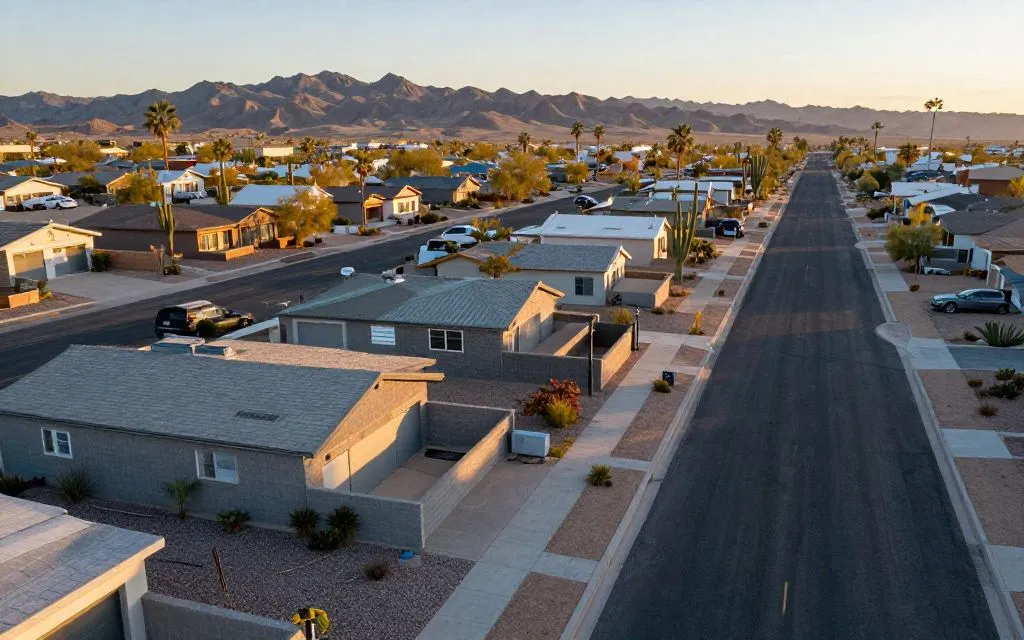
Ask for a fence quote anywhere else in the country and you will be talking about wood, vinyl or aluminum. Ask in metro Phoenix and the conversation starts with masonry. The default residential barrier across the Valley is a concrete block wall, generally 6 feet, gray or stuccoed, and it runs the whole property line.
Fences and block walls in Phoenix are not two versions of one product. One is a structure with a foundation, the other is an assembly of posts and panels, and that difference decides everything about cost, permits and how the thing eventually fails.
The second real category is tubular steel, sold here under the names view fence and wrought iron. It goes up where a mountain view, a wash or a golf course is worth keeping, and it goes up often, because plenty of Valley communities require open fencing on street-facing elevations instead of a solid wall.
Wood, vinyl and chain link exist here too, in small numbers, and the sun is the main reason the numbers stay small.
That hierarchy matters because it is the opposite of what most national pricing sites assume. A page that quotes you a per-foot fence average has priced a product that is not what your neighbor has, is not what your community approved, and is not what the contractor standing in your driveway is bidding on.
Every wall, fence and gate project, one at a time walks through the sixteen jobs Valley homeowners commission, from a new wall to a repair to an RV gate.
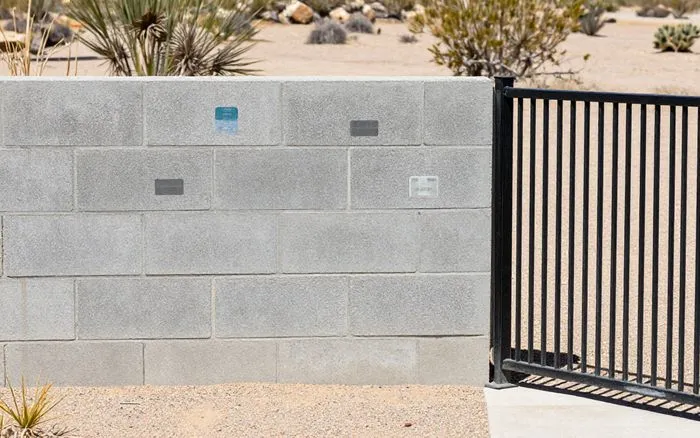
A per-foot number for this work does not exist in any honest form, and whoever leads with one is selling something. Price comes from drivers, and they stack in a fairly predictable order.
Length sets the quantity of structure. Height multiplies it, and not proportionally: each added foot commonly runs something like a fifth to a quarter more, because the wall gets heavier, the footing widens and the steel schedule changes. Then comes soil, which is where Valley quotes diverge from each other most violently.
Caliche is the cemented layer sitting under much of this metro at a depth nobody can predict from the curb, and hitting it turns a routine footing trench into equipment work. It is a word almost no homeowner types into a search box, and one almost every homeowner ends up paying for.
After that: reinforcing steel and grout, block grade, finish, demolition and haul-off of whatever is standing there now, engineering when the height triggers it, and permit fees. Gates price separately, per installed gate, with automation as its own system rather than an accessory.
One arithmetic trap is worth knowing before you open a quote. Structural work follows linear feet at a stated height, while finish work follows square footage of face. A bid that prices the whole job per square foot at an inflated height, or rolls both into one round number, has buried the part you needed in order to compare it against anything else.
The full cost breakdown, line by line takes the price apart in the order a bid is actually assembled, and the estimator turns your own dimensions into a block, mortar and rebar takeoff with a low, likely and high band.
The community is the first gate. Subdivisions built here over the last four decades are largely covenant-governed, and the architectural committee controls height, material, color and style. Get that approval in writing before you file with the city, because a covenant can force a change, or a removal, on a wall the city has already inspected and signed off. The city will not referee that dispute for you.
How the ARC process runs, and which approval comes first is the page to read before you spend anything.
The jurisdiction comes second, and here the Valley stops behaving like one place. Front-yard caps run from 2 feet for a solid fence in Surprise to 4 feet in Tempe, with Phoenix sitting at 40 inches, not the 3 feet that half the contractor sites repeat. Mesa exempts fences up to 6 feet from a building permit and attaches three exceptions nobody quotes. Scottsdale asks for site-plan approval on any wall even where no permit is required. Queen Creek requires a permit for every fence, at any height.
What your own city requires is where the ten jurisdictions sit side by side, and the dated grid of every authority prints the source and check date inside each cell.
Above the cities sits one regional line. Maricopa County directive DD-5012-01, revised 5/4/2026, requires plans sealed by an Arizona registered professional for walls over 7 feet in 6-inch or thicker block, and for retaining walls over 4 feet measured from the bottom of the footing to the top, or carrying a surcharge. For unincorporated addresses that directive is not a backstop, it is the rule.
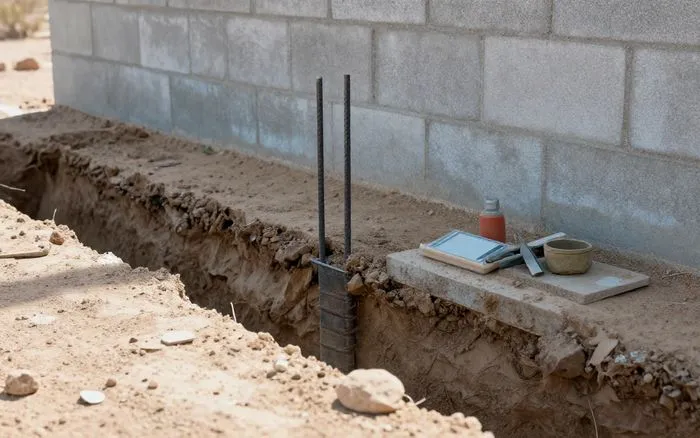
Then the call that costs nothing and gets skipped anyway. Arizona 811, the locate service older hands around here still call Blue Stake, marks buried utilities free of charge, and state law requires at least two full working days of notice before excavation. A footing trench counts as excavation, and so does a post hole.
The permit process end to end covers filing, the locate call and the license class to check in a bid.
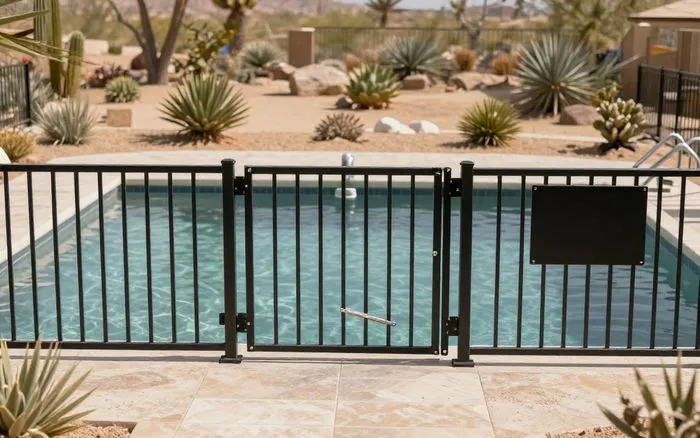
Arizona has no general state law about how tall your fence may be. It has a very specific one about pools. A.R.S. 36-1681 sets the enclosure standard for residential pools: a barrier at least 5 feet high measured from the outside, no opening that will pass a 4-inch sphere, gates that close and latch themselves and swing away from the water, and a minimum distance between the barrier and the water's edge.
Some cities go further. Chandler requires an exterior barrier of at least 6 feet, and Queen Creek codifies its own option set.
The question most Valley owners arrive with is not what the statute says but whether the wall already standing around their yard satisfies it. Usually the wall is fine and the gate is not, which happens to be the cheapest failure to fix.
What the statute actually requires, subsection by subsection reads the law itself, and the self-check on the wall you already own turns it into seven things you can go measure this afternoon.
No page on this site will tell you that a specific barrier complies. That call belongs to your jurisdiction, and it is not one any website can make on your behalf.
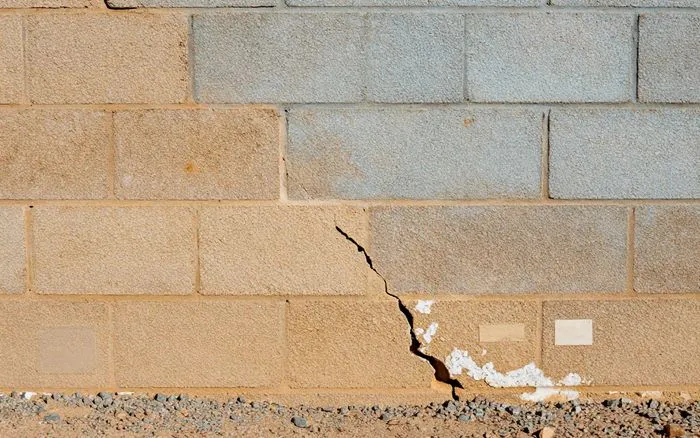
The failures here do not start at the surface. Soil moves. Expansive clay swells and shrinks through the monsoon cycle, caliche perches water where it ought to drain, and August is when a footing poured in May finds out what it is standing on. Leaning walls, stair-step cracks and collapsed sections in this metro almost always come back to water and soil rather than to bad block.
Which is why a crack is a diagnosis before it is a repair, and why the drainage line in a quote tells you more than the block grade does.
Sun does the rest, and it sorts materials into two groups. Reinforced masonry and powder-coated steel hold their properties under sustained ultraviolet. Vinyl and wood lose theirs, on a timescale short enough to matter: reported service lives run 30 to 50 years and beyond for a block wall with a sound footing, 20 to 30 for a view fence before it wants refinishing, 10 to 15 for desert-rated vinyl, and 5 to 10 for wood on a two-to-three-year re-stain cycle.
Those are commercial ranges rather than test data, and this site prints them as ranges for that reason.
Carry the arithmetic out over twenty years and the option with the lowest install bid stops being the cheapest one to own, usually somewhere around year eight. How the options compare over a real horizon sets them against each other with every refinish and replacement cycle counted.
Most people arrive here holding two or three bids that differ by thousands of dollars and describe the same job in different words. The reason is almost always that the cheap one left something out, and the something is usually underground.
A quote worth comparing states its footing dimensions, its rebar size and spacing, which cores get grouted, whether there is a bond beam and at what course, the block type, the drainage provision, the finish and its prep, the demolition scope, who pulls the permit, and the license classification for the work. None of those can be verified after the wall is finished. All of them are cheap to ask about before it starts.
Four things should stop you cold regardless of price: a repair quoted by someone who never investigated the footing; a finish quoted straight over visible white bloom, which is efflorescence and means water is moving through the wall; an automation package that says nothing about entrapment sensors; and a bid that lands materially lower while describing the job in fewer words than the others. How to line up competing quotes and find the padding does this bid by bid.
Contractors here are licensed by the Arizona Registrar of Contractors under classifications that match scope, and hiring outside that system forfeits the state's recovery-fund backstop along with it. Checking the classification takes a minute and is the single highest-value minute in this process.
What a wall, a fence and a gate actually cost in metro Phoenix, and how each price is built from its parts. This is the cluster that lets you rebuild a quote from footing, block, steel, finish, gates, demolition and permit, then find the line that does not belong.
Block Wall Cost in Phoenix: Price Per Linear Foot, Per Course, and Line by Line
the price taken apart in the order a bid writer assembles it, with the per-course and per-linear-foot conversions the trade actually quotes in.
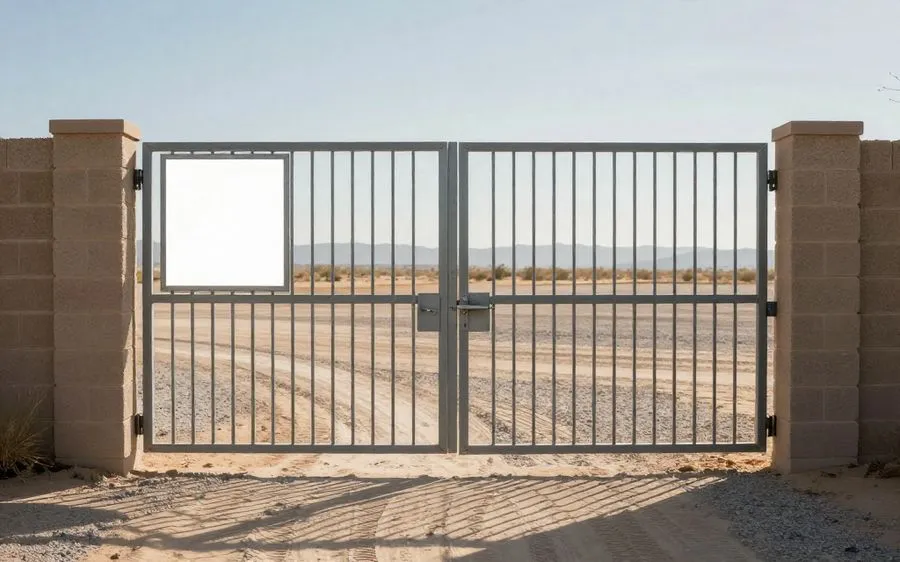
RV Gate, Driveway Gate and Walk Gate Cost in Phoenix (With Automation)
gates priced by clear opening width, which is the unit you shop in, plus the solar-versus-hardwired trade-off.

How to Read and Compare Block Wall Quotes in Phoenix (and Where They're Padded)
build an independent baseline first, then line-itemize three bids onto equal footing and name the padded line.
Which two bodies have to say yes before a wall goes up, in what order, and what each of them measures. Height caps, sight triangles and the engineering threshold sit here, along with the private approval most owners discover too late.
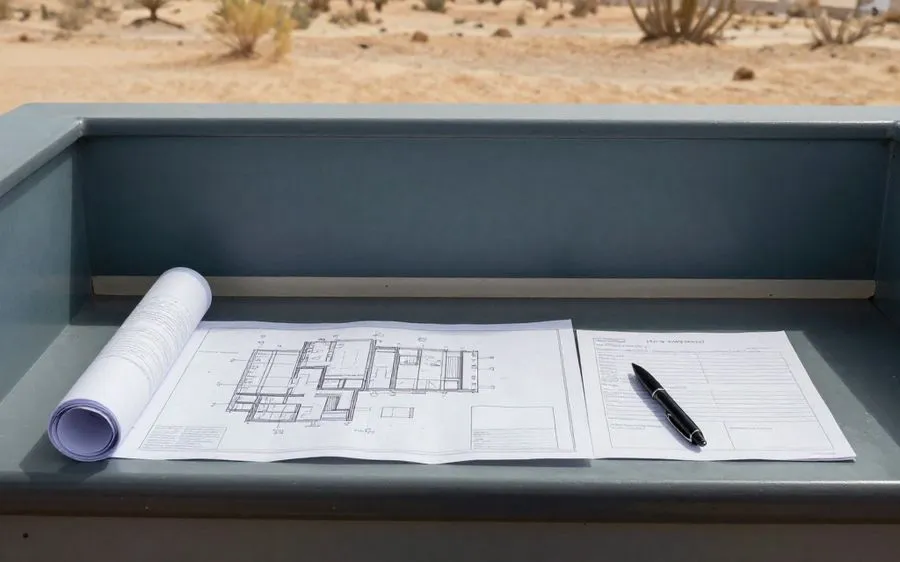
Do You Need a Permit for a Wall or Fence in Metro Phoenix? The City Process, Fee and Blue Stake Call
per-city triggers built from each city's own code rather than an aggregator average, joined to the locate call and the license check.
how high you may build by yard and lot type, including the corner-lot cut that takes a 6-foot wall down to 2 or 3.
the association as a peer gatekeeper rather than a footnote, with the order question answered outright.
Child-safety law rather than a design choice. What the Arizona statute requires of a pool enclosure, and how to check whether the wall already around your yard qualifies before anyone sells you a new one.
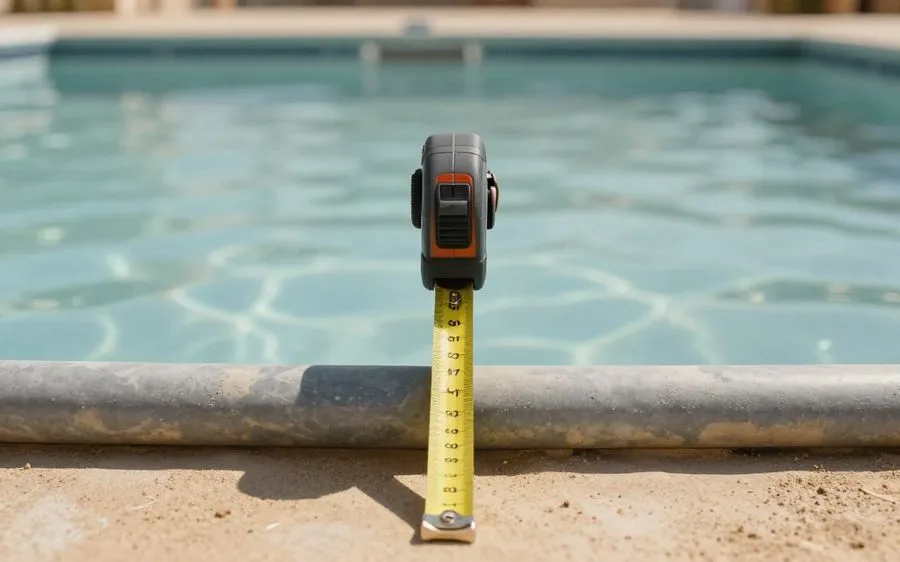
Arizona Pool Barrier Law: What A.R.S. 36-1681 Actually Requires (Height, Gate, Doors)
the statute read requirement by requirement with its subsections, plus corrections to the errors installer pages repeat.

Does My Block Wall Count as a Pool Fence? A Self-Check and the Cheapest Compliant Fix
seven measurable checks on the enclosure you already own, and the cheapest failing link to fix first.
Sixteen perimeter jobs explained one at a time: what each physically involves, what drives its cost, which rule bites it specifically, and what goes wrong with it in this climate. The hub carries the bid-spec checklist that makes quotes comparable.
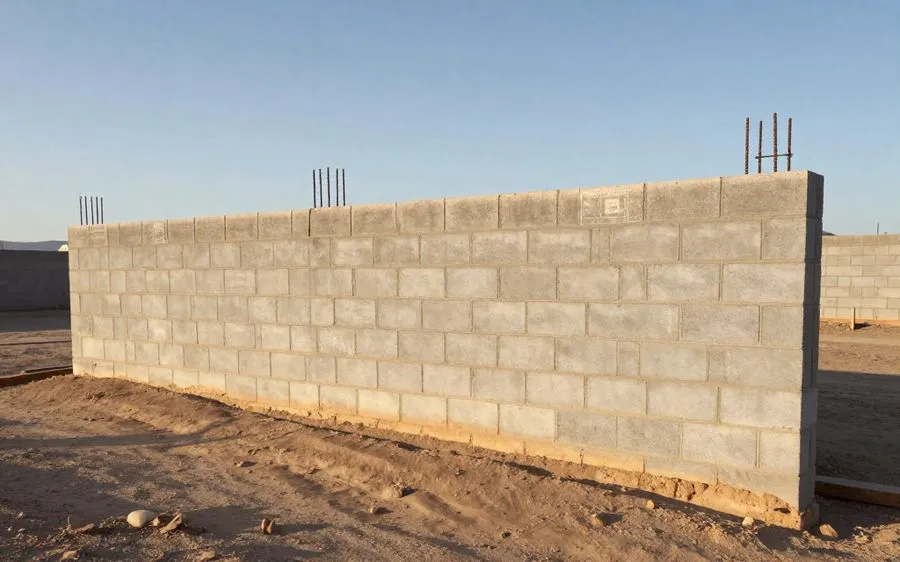
New Block Wall Installation in Phoenix
the whole build sequence, and why both the cost and the risk end up buried in ground nobody can inspect once the wall is up.
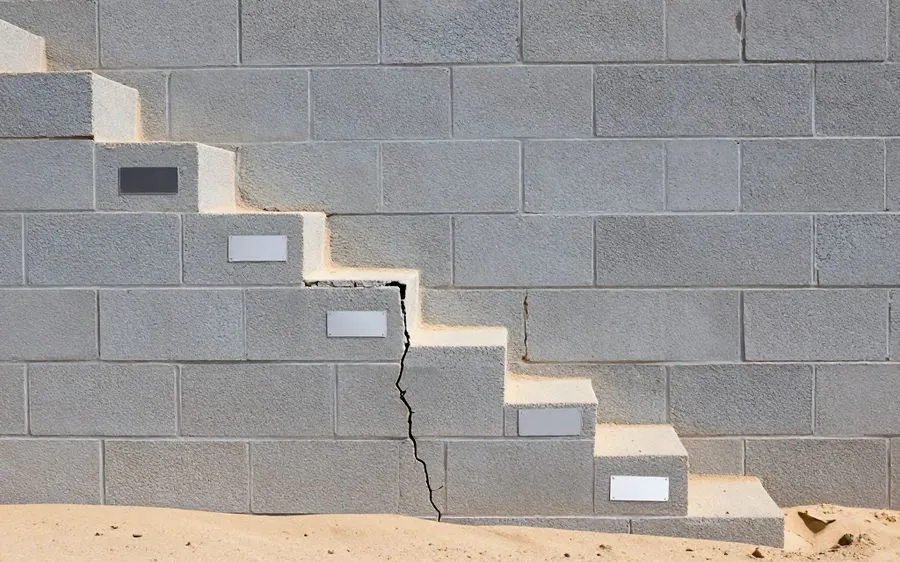
Block Wall Repair: Cracks, Lean and Collapse
a patch quote with no investigation behind it is the warning sign, because on this failure the diagnosis is the job.
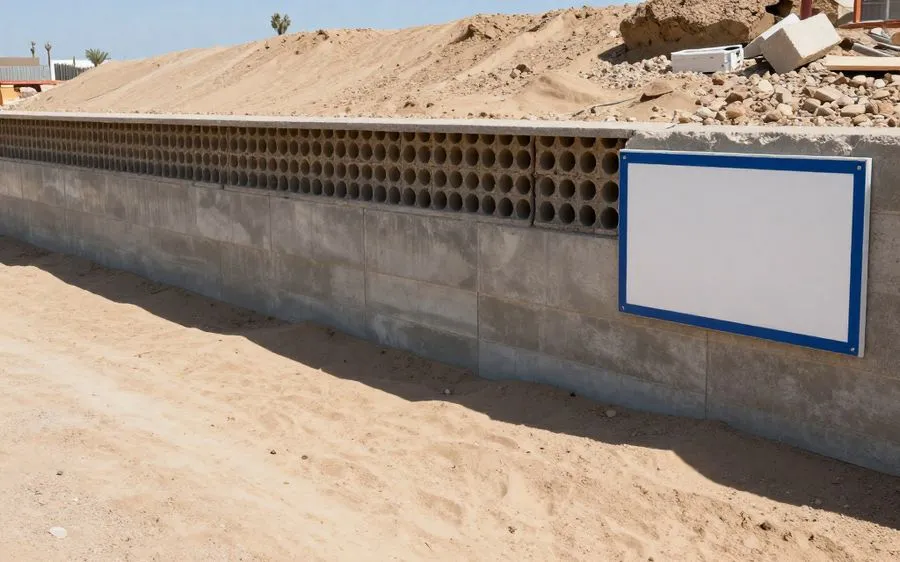
Retaining Wall Construction in Phoenix
earth pushes back, drainage decides whether the wall wins, and the engineering line arrives sooner than owners expect.
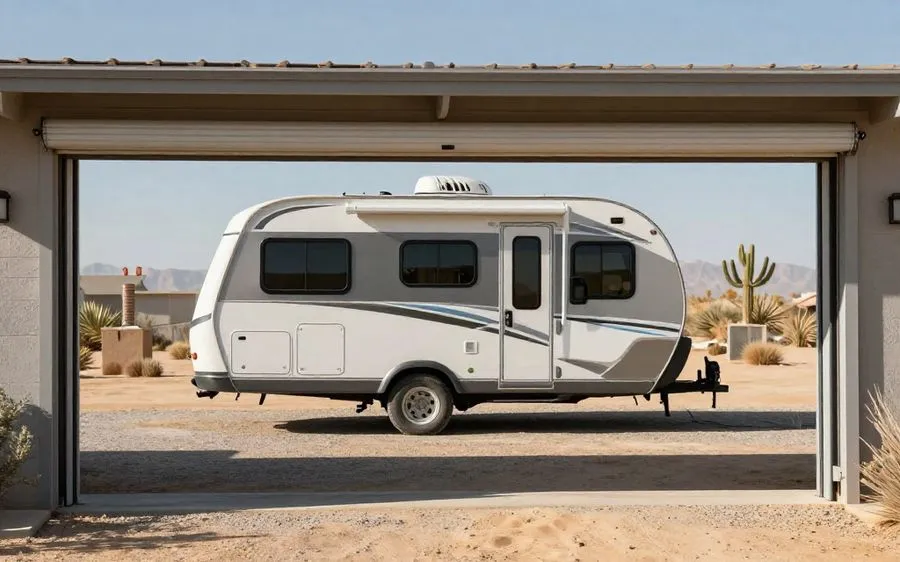
RV Gate Installation and Sizing
sized against the rig itself, mirrors included; an opening the RV cannot clear is the costliest thing in this region to have to rebuild.
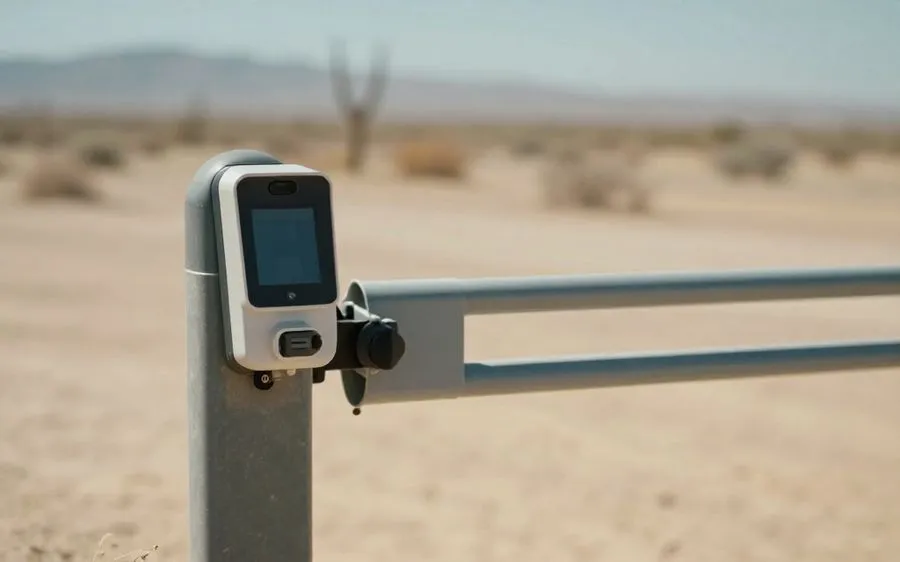
Gate Openers and Automation: The Safety Layer
automation is life-safety equipment, and monitored entrapment protection is the piece the cheap kits omit.
Ten Valley jurisdictions plus the unincorporated county, each with its own height caps, its own permit trigger and its own local quirk. Start here if you are not certain which authority governs your address, because every other number depends on that answer.
Phoenix Fence, Wall and Gate Rules
the front-yard cap is 40 inches, not the 3 feet everyone repeats, and the prohibited materials are named outright.
Mesa Fence, Wall and Gate Rules
the 6-foot exemption everyone repeats, and the three exceptions that remove it.
Scottsdale Fence, Wall and Gate Rules
the one jurisdiction in the metro where you can need approval without needing a permit.
Chandler Fence, Wall and Gate Rules
a zoning clearance no matter how low the wall, and a pool barrier requirement above the state minimum.
Permit and Height Rules by Jurisdiction, Metro Phoenix
all eleven authorities in one dated grid, with the source and check date printed inside every cell.
Head-to-head decisions settled on a twenty-year horizon instead of an install bid, with every refinish and replacement cycle counted. The hub also hosts the block wall estimator.
Block Wall vs Wrought Iron / View Fence
the Valley's central fork, and the view and the covenant usually settle it before price is even discussed.
why the cheaper install bid loses over twenty years in this sun.
two options that solve opposite problems, and the second-story sightline that neither of them reaches.
Swing Gate vs Roll Gate for a Driveway
geometry beats preference here: slope rules out the swing, and a cantilever needs run-back room you may not have.

your dimensions in, a material takeoff and a cost band out, with every rate on screen for you to argue with.
This site is a buyer's guide, and its whole value depends on you being able to check it. So here is how the pages are made.
Every regulatory figure traces to the authority that issued it. City height caps and permit triggers come from each city's own code with the section number and the revision date printed next to the number, not from an aggregator average. The pool-barrier requirements come from the statute. The engineering threshold comes from the Maricopa County directive, with its revision date attached, because that directive has been revised more than once and the superseded figure still circulates.
Where a figure could not be traced to a primary source, the page says so in plain words rather than burying it in a footnote.
A few things on this site are left open on purpose: no city in this metro published a permit fee dollar figure that could be confirmed, Glendale's permit trigger rests on commercial sources rather than the city's own code, and Queen Creek's height caps never surfaced in any official document. Those cells stay marked as unconfirmed. Filling them with a neighboring city's number would destroy the only thing this site has that the aggregators do not.
Cost and lifespan figures are a different class of claim and are treated accordingly. They come from trade and commercial sources, they are printed as dated ranges, and they are never smoothed into a single confident number. Five websites carrying the same lifespan figure is not five confirmations. It is one number, copied.
Pages that state a code section, a height threshold or a safety standard are reviewed by Alma Reyes, ICC-certified residential building inspector in Maricopa County, before publication and again on the review cycle. Regulatory and safety pages carry her name visibly. Pages about materials, finishes and pricing carry the author line and the last-reviewed date.
What this site does not do is as important as what it does. It performs no wall, fence or gate work, accepts no work, takes no contractor advertising or referral fees, and will not tell you that a specific barrier complies with the code that applies at your address.
That determination belongs to your jurisdiction, and any website that hands it to you is doing you harm.
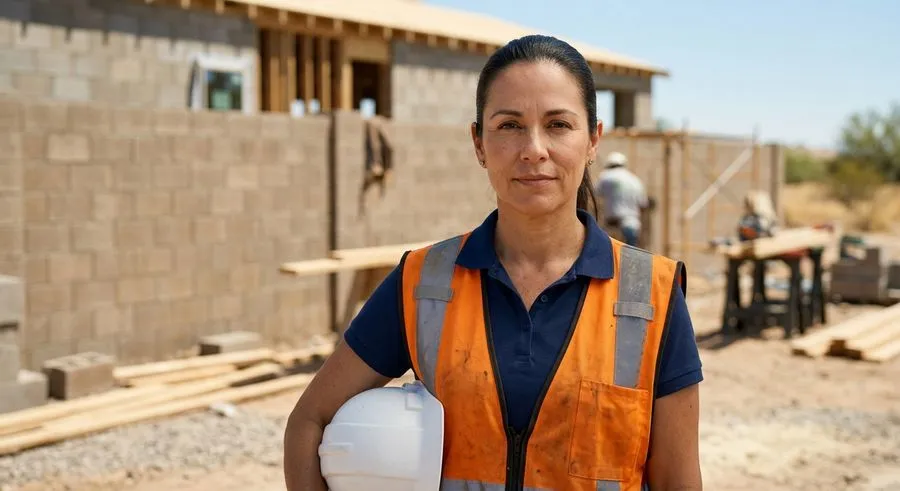
Alma Reyes, ICC-certified residential building inspector in Maricopa County, reviews every page that states a code section, a height threshold or a safety standard.
Curt Bellamy ran block wall crews in the East Valley for eleven years, first as a mason and then as the person writing the bids. He left the trade to consult on disputes between homeowners and contractors, mostly because he got tired of watching people sign quotes they could not read. He now writes about what this work costs and why, from the side of the person paying for it.
He does not sell walls, fences or gates, and does not take referral fees from anyone who does.
Signed, Curt Bellamy, author and editor, Phoenix Fence Guide.
No to both. This site publishes information and performs no work of any kind, which is exactly why it can afford to tell you when a project is a bad idea. It also names no companies and takes no referral fees, so there is no contractor whose interests it is quietly serving.
No, and readers pay for assuming there is. Front-yard caps in this metro range from 2 feet to 4 feet depending on the city and the fence type, and side and rear runs vary from 6 to 8 feet. The rule that applies is set by your jurisdiction, and a share of Valley addresses are governed by the county rather than by any city at all.
Because that is what the market is. The default residential barrier across metro Phoenix is a masonry block wall, with view fence second. Writing about wood and vinyl as though they were the norm would describe some other city's market and leave you unprepared for the quotes you are going to receive.
Trust them as dated ranges from trade and commercial sources, which is what they are and what they are labeled as. They are useful for judging whether a quote sits inside the normal band and useless as a substitute for a quote. Every cost page shows how the number is assembled so you can rebuild it with your own dimensions.
Both, in the sense that you need both. A city permit does not override a covenant, and a covenant does not override the code. The practical answer is to secure the private approval in writing first, because it is the one that can make a permit you already paid for worthless.
Leave a number and we pass it to a licensed Arizona contractor. We are not one, we do not bid on the work, and we do not sell your number on.
Send your number to [email protected] with the best time to call and one line about the project. It reaches a person, not an autoresponder, and the page you were reading travels with it so we know what you were pricing.
Advertiser disclosure: this page is free to read because a contractor may pay us for a lead that comes from it. That arrangement never changes what a page says. We publish no contractor names, no rankings and no reviews, and we say plainly when a project is not worth doing.