Block Wall vs Vinyl or Wood
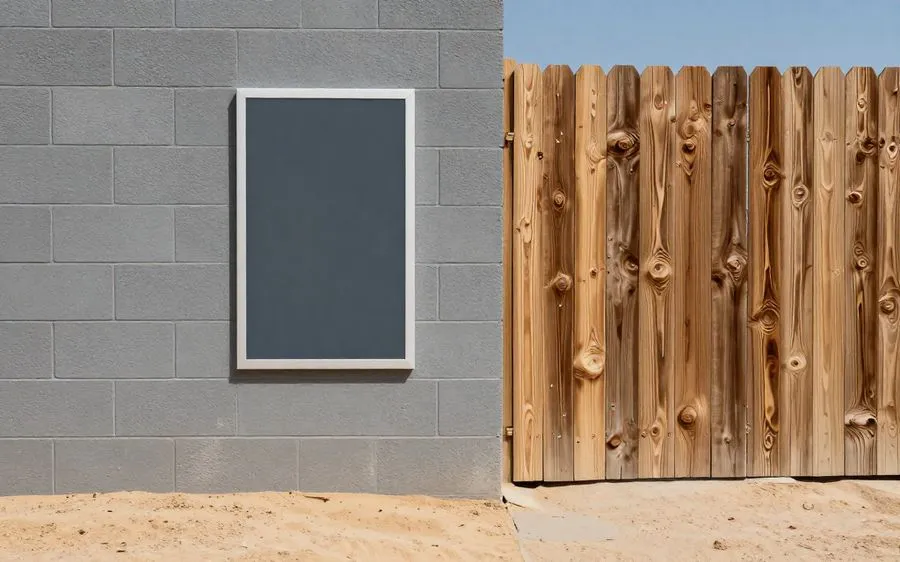
A vinyl or wood fence is cheaper on the day you sign the quote. In metro Phoenix, that is often true by a painful margin. Over 20 years, though, the lower bid usually stops being the lower cost once replacement and upkeep enter the same spreadsheet as the first installation.
There is nothing wrong with vinyl or wood. There is something wrong with calling either one the cheap option without saying over what period. I used to write masonry bids in the East Valley, and I watched homeowners compare a block-wall quote with a fence quote as if both purchases ended at installation. They do not. This page lays out the arithmetic so you can change an input, disagree with it, and still see what happens to the answer.
The install bid is not the price
The usual surprise is not that block costs more to put up. It does. The surprise is that a fence with a shorter desert life can require another purchase while the original wall is still doing its job, and wood asks for work between those purchases.
Think of the first bid as the entry fee, not the total. A 100-linear-foot rear boundary can make the difference feel enormous at signing. At the 10-year or 15-year mark, the comparison changes: standard vinyl may be at the end of its quoted desert life, premium vinyl may be approaching a replacement decision, and a wood owner has already paid for several staining cycles.
I am not asking you to trust a slogan about lifetime value. The price and lifespan figures below are commercial estimates from 2025-2026, presented as ranges. Put your own length, expected move date, and grade into the lifecycle calculator before you decide.
How we compare barrier options
This comparison uses the same long-horizon arithmetic applied in block wall versus view fence: one horizon, every maintenance cycle counted, and ranges instead of a fake precise total. Rules come before price because a lower quote has no value if the community will not approve the material.
For this page, the horizon is 20 years. The calculation does not pretend every vinyl panel, board, lot, and installer behaves alike. It asks a simpler question: if the quoted lifespan and maintenance schedule are even roughly right, which costs recur before year 20?
That matters more here than a national average. Phoenix sun and heat cycles are part of the purchase, even though neither appears as a line item on a proposal.
What each costs to buy
The gap is real, and I would not hide it from a homeowner trying to get a yard enclosed now. Commercial Arizona pricing from 2025-2026 puts a block wall at roughly $60-$180 per linear foot. Premium or desert-rated vinyl is commonly quoted around $35-$85 per linear foot. Wood commonly begins around $20-$50 per linear foot.
Those are not promises or a bid. They are commercial ranges, and a gate, access, wall height, demolition, site conditions, and finish can move a project within or beyond its band. For the detailed dated range inputs, see the block wall cost breakdown.
| Material | Install band per lf | Expected life here | Maintenance cycle | What failure looks like |
|---|---|---|---|---|
| Block | About $60-$180 | About 30-50+ years when the footing holds | Inspect cracks and drainage | Movement or cracking tied to the ground beneath it |
| Premium vinyl | About $35-$85 | About 10-15 years | Inspect heat and UV wear | Yellowing, warped panels, or splits at fasteners |
| Standard vinyl | About $35-$85 | About 5-7 years | Inspect heat and UV wear | Embrittlement, cracking, and panel failure |
| Wood | About $20-$50 | About 5-10 years, or 8-12 if well maintained | Re-stain every 2-3 years | Graying, checking, splits, and deteriorated boards |
The vinyl bands overlap because grade is not a cosmetic detail. A thin, standard panel and a premium desert-rated panel should not be treated as the same purchase. Likewise, the low end of a wood quote is not proof that its future staining is free.
What the sun does to each one
By late afternoon, a west-facing fence has been doing a different job from the one shown in a catalog. The material is taking ultraviolet exposure and repeating heat cycles every day. That is the mechanism behind the ranges, not an excuse to scare you into masonry.
For vinyl, trade sources describe UV degrading PVC while heat cycling stresses the panels. The grade matters: UV inhibitors and wall thickness are the practical differences a buyer should ask about before accepting a vinyl quote. Dark colors need special caution because they can overheat and warp in full sun. I would not put a budget-grade dark vinyl fence along a long, unshaded Phoenix exposure.
The failure can start small. A panel yellows, then a fastener area splits, or a panel no longer sits as cleanly between posts. That does not mean every vinyl fence fails on one calendar date. It means a five-year commercial estimate for standard grade is a cost input, not a warranty you can ignore.
Wood loses the fight in another way. UV breaks down lignin, and heat drives moisture from the boards. The result is familiar in Phoenix backyards: gray surfaces, checking, and splits. Stain can slow the weathering, but it creates a repeating appointment with the fence.
Block has no finish that must be re-stained or a polymer panel that has to resist UV. Its caveat is less visible. A block wall can last for decades, often cited around 30-50+ years, but that claim travels with the footing and ground conditions. I have seen what happens when that gets treated as a minor detail. On one job, I made the footing call too lightly for the conditions, and the problem was below grade long before the wall showed it. The block wall installation guide is where the construction decision belongs.
What each costs to keep
Here is the part the first quote rarely shows. The table marks events within a 20-year horizon, not dollar totals that pretend the flagged ranges are exact. A replacement landing in the horizon is the crossover. Change the lifespan or your staying period, and the result can change with it.
| Year | Block | Vinyl | Wood |
|---|---|---|---|
| Install | Install once; footing and site conditions matter | Install premium or standard grade | Install; begin maintenance plan |
| 3 | Inspect drainage and cracking | Inspect UV and heat wear | Re-stain cycle due around this point |
| 6 | Inspect drainage and cracking | Standard grade may be near replacement range | Re-stain again; check boards for splits |
| 10 | Inspect drainage and cracking | Standard grade replacement can fall inside the horizon; premium vinyl remains a grade-dependent decision | Re-stain; typical wood life may be reached |
| 15 | Inspect drainage and cracking | Premium vinyl replacement can fall inside the horizon | Re-stain; a well-maintained fence may be near its quoted range |
| 20 | Original wall may still be in service if footing holds | At least one replacement is a realistic input for either grade range | Replacement plus repeated staining is a realistic input |
Premium desert-rated vinyl is commonly estimated at about 10-15 years in this climate. Standard vinyl is commonly estimated around 5-7 years before UV embrittlement. Both are commercial estimates, not universal dates, but both place a replacement decision inside a 20-year ownership horizon.
Wood is commonly estimated around 5-10 years, with 8-12 years sometimes quoted for a well-maintained fence. The distinction is not academic. A wood fence that receives stain every 2-3 years is a different ownership plan from one installed and forgotten. If you skip the schedule, the lower installation price does not protect you from the sun.
Wood’s actual maintenance schedule
Year 0: Treat the new wood fence as an asset with a calendar, not as a completed expense. Keep the installation date and the stain product details with the bid.
Years 2-3: Inspect the sun-facing boards, then plan the first re-stain cycle. Look for graying, checking, and split areas before deciding the work can wait another season.
Years 4-6: Re-stain again on the same 2-3 year rhythm. Replace damaged boards as a repair, but do not call that a full reset of the fence’s age.
Years 7-12: Continue the cycle and compare the actual condition with the 5-10 year commercial life range and the 8-12 year well-maintained range. Budget a replacement decision instead of being surprised by it.
Years 13-20: If the fence is still serving well, the maintenance effort bought time. If not, count a new installation and another maintenance cycle in the 20-year total.
The block figure is different in kind. Commercial sources often place a properly supported block wall around 30-50+ years, subject to the footing caveat. That is why the table does not schedule a replacement at year 20. It does not mean a wall is immune to bad ground, drainage trouble, or a poor original decision. It means its expected replacement cycle is outside this comparison horizon when the footing holds.
Wind, and the thing nobody prices
Monsoon wind does not ask what the brochure says about lifespan. A solid-panel fence catches wind like a sail. In a microburst, panel and post failures are a cost that a standard lifespan range cannot capture well.
That is one reason block became the default boundary material in much of the Valley. Its mass changes the behavior of the enclosure. I have watched a monsoon expose a bad assumption fast, and I do not treat wind as a decorative concern after that. It is not a reason to claim every vinyl or wood fence will fail. It is a reason to price the risk honestly when the boundary is long and exposed.
What your community will allow
Before collecting detailed bids, read your CC&Rs and architectural rules. Many Valley communities restrict non-masonry materials, and wood visible from the street is commonly prohibited. That is a pattern, not a blanket legal rule for every neighborhood.
Ask the association what material, height, color, and street visibility rules apply to your lot. Get the answer in the governing documents or approval record, not from a neighbor’s fence. A community may allow vinyl in a rear yard while rejecting it along a visible edge, or it may have a more restrictive masonry standard.
For this comparison, the useful rule is plain: do not calculate the lifecycle of a material until you know it is an eligible choice.
The verdict, by situation
There is no universal winner. The right material is tied to the years you will own the property, how much maintenance you will actually do, the exposure, and the rules on the lot.
Staying more than a few years and wanting no maintenance
Winner: block wall. The initial bid is higher, but its commonly quoted 30-50+ year life sits beyond the 20-year horizon if the footing holds. For an owner who does not want a staining calendar or a planned fence replacement, that arithmetic is hard to beat.
I would still inspect the proposal for footing and site conditions. A long-lived material does not repair a short-sighted base (I learned that one the expensive way).
A short-term screen or a rental you will sell
Winner: premium desert-rated vinyl. For a short ownership window, the lower upfront band can be the sensible answer, especially when the next owner will make the later replacement decision. Use premium desert-rated vinyl rather than budget grade in full sun, and avoid dark colors where heat can warp the panels.
This is the honest place for vinyl. It can solve a real near-term need without pretending it is a block wall at a discount. Confirm the material is allowed before you buy it.
Wanting the look of wood and accepting the schedule
Winner: wood, but only with maintenance budgeted. Wood is a preference purchase here, not a maintenance-free bargain. If you will re-stain every 2-3 years and accept board repairs, the look may be worth the work and the shorter 5-10 year commercial life range.
If that schedule already sounds unlikely, do not rely on good intentions. The fence will still weather. A wood owner who skips the cycle can turn the low install band into the most expensive option on this page.
Common questions
Is a vinyl fence cheaper than a block wall?
To buy, clearly. Across 20 years, it usually is not once a replacement falls inside the horizon, using the commercial lifespan ranges shown here. The exact answer changes with grade, length, and how long you stay.
How long does vinyl last in Arizona?
Premium desert-rated vinyl is commonly quoted at about 10-15 years, while standard grades are commonly quoted around 5-7 years. Both figures are commercial estimates, and UV exposure, heat cycling, color, and grade affect the outcome.
Why do Phoenix homes all have block walls?
Block often wins a long ownership horizon because it has no finish or routine replacement cycle in the same way vinyl and wood do. The market in metro Phoenix worked that out over decades, though a sound footing remains part of the wall’s lifespan.
Is a wood fence worth it here?
It can be worth it if you will re-stain it every 2-3 years. If you will not, the recurring weathering and likely earlier replacement make wood the costliest choice in this comparison.
Will my community let me use vinyl or wood?
Many Valley communities restrict both materials, and wood visible from the street is commonly prohibited. Check your CC&Rs and approval requirements before pricing a fence, because rules vary by community.
Put your own numbers into the lifecycle calculator, including the years you actually plan to stay.
Sources
- Commercial Arizona fence sources: 2025-2026 installation bands and desert lifespan ranges for block, vinyl, and wood.
- Trade sources: vinyl UV behavior, heat cycling, and the difference between standard and premium grades.
- Wood-science practice: UV breakdown of lignin and moisture loss in exterior boards.
- Research topic overview: block-wall lifespan and the footing caveat.
- Block wall cost breakdown: the site’s dated range inputs.
Last reviewed 2026-07-29. Every lifecycle input above is a commercial estimate and should be re-dated at review.
This comparison is general planning information, not a contractor bid, engineering opinion, community approval, or warranty. Prices and lifespans are ranges, conditions vary by lot and installation, and block-wall longevity depends on its footing and the ground beneath it. Read your governing documents and obtain project-specific advice before you commit.
Read next in compare
Enter your wall length, height in courses and finish to get the block, mortar, grout and rebar counts plus a low, likely and high cost range you can check.
Block Wall vs Wrought Iron / View Fence
Block wall or view fence in metro Phoenix: what each costs over 20 years, how each handles the sun, and which one wins for your lot and your HOA rules.
Whether you need to block a sightline or keep one in metro Phoenix, why a six-foot barrier cannot stop an upstairs view, and what your covenants allow instead.
Want a licensed contractor to call you back?
Leave a number and we pass it to a licensed Arizona contractor. We are not one, we do not bid on the work, and we do not sell your number on.
Request a callback
Send your number to [email protected] with the best time to call and one line about the project. It reaches a person, not an autoresponder, and the page you were reading travels with it so we know what you were pricing.
Advertiser disclosure: this page is free to read because a contractor may pay us for a lead that comes from it. That arrangement never changes what a page says. We publish no contractor names, no rankings and no reviews, and we say plainly when a project is not worth doing.