Block Wall vs Wrought Iron / View Fence
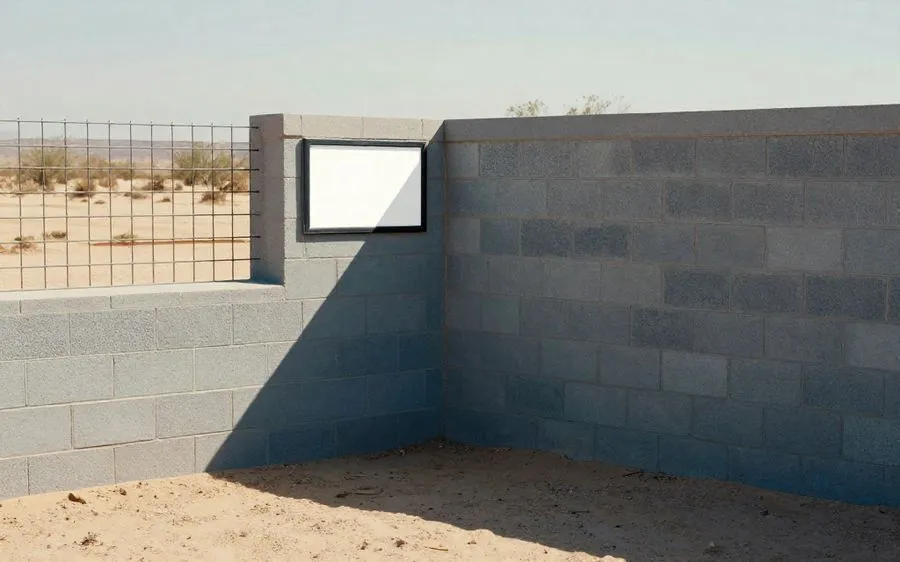
I have priced a block wall and a view fence for the same customer on the same Phoenix lot. The covenant settled it in one sentence. That is why I do not start this comparison with the bid total.
This page is general information, not engineering, legal, HOA, or contractor advice. Price and service-life figures are commercial ranges that should be re-dated when you request bids. Confirm your lot’s rules, height, setbacks, drainage, and engineering needs before committing to either option.
The fork, and the axis that usually settles it
The real choice is rarely a $5-per-foot difference on an installation quote. It is whether your lot has a sightline worth keeping and whether the community allows a solid barrier on that elevation. A block wall is for privacy, enclosure, and a long-lived boundary. A wrought-iron view fence is for keeping the boundary without closing off a golf course, desert wash, street, or neighbor’s view.
Both are good products. Neither wins by default. A solid wall can make a rear yard feel like a private room, while an open fence can keep a view lot from feeling boxed in. Put a wall where the CC&Rs require open fencing and the wall is not a contender, no matter how attractive its twenty-year math looks.
Privacy is the hard dividing line. A view fence with slats, mesh, or planting can soften a sightline, but it does not become a solid wall. I have watched owners pay to learn that distinction after the rails were already installed.
How we compare barrier options
I use a 20-30-year horizon, not the day-one quote. That means counting the expected touch-up and recoating cycle for steel, then comparing it with a block wall whose life depends on a sound footing and drainage.
The useful order is rules first, cost second. City limits or community covenants can remove an option before its material life matters. For the related homeowner decision about screening without a solid barrier, see privacy versus view fencing.
Side by side on the deciding criteria
Block and steel both tolerate Phoenix ultraviolet exposure as materials. The difference is that powder-coated steel has a finish that eventually needs attention, while masonry does not have a coating cycle to preserve. The table is a decision tool, not a promise about any particular installation.
| Criterion | Block wall | View fence |
|---|---|---|
| Privacy | Full visual separation when built as a solid wall. | Open by design; slats or mesh provide partial screening only. |
| Sightlines and airflow | Stops views and acts as a solid wind surface. | Preserves views and lets wind pass through. |
| Lifespan | Commercial estimates put it at 30-50+ years with near-zero maintenance, provided the footing and drainage remain sound. | Commercial estimates commonly put the finish cycle at 20-30 years to refinish, depending on finish quality and exposure. |
| Recurring cost | Essentially no recurring finish cost. | Touch-up and eventual strip-and-recoat belong in the ownership cost. |
| Behavior in UV | The masonry itself has no powder coat to chalk or lift. | The finish can degrade, especially at welds. |
| Behavior in monsoon wind | A solid wall takes wind load; footing and drainage matter. | Open rails reduce the surface wind pushes against. |
| Community acceptance | Many Valley communities limit solid street-side walls. Read the CC&Rs. | Often fits view or open-fencing requirements, but the approved style and color can be specific. |
| What failure looks like | Movement, cracking, or leaning commonly points back to footing or drainage. | Chalked, lifted, or damaged coating can begin at welds. |
That last row matters more than it sounds. A sound wall can sit quietly for decades. A badly supported one does not get credit for being made of durable block.
What each costs across twenty years
Commercial Arizona ranges from 2025-2026 place block-wall installation at about $60-$180 per linear foot, driven by footing, finish, and site conditions. View-fence installation is commonly quoted around $55-$120 per linear foot, with finish among the variables. Treat both as screening bands, not a quote. Corners, access, grade, wall height, demolition, and the approval package can move a real bid.
Here is the simple arithmetic. For 100 linear feet, the block installation band is roughly $6,000-$18,000. The view-fence band is roughly $5,500-$12,000. That can make the fence the lower initial purchase, especially at the lower end of its range. It is not the whole ownership cost.
Architectural-grade powder coat is commonly estimated to need its first touch-up at roughly 10-15 years in this climate. Lower-grade finishes are sometimes estimated at only 2-3 years. Around year 25, commercial estimates place stripping and recoating at about 40-60% of a new fence. A twenty-year owner may avoid the full recoat but still face touch-up. A thirty-year owner needs to price it.
The block calculation stays closer to installation cost because there is no powder-coat cycle. That advantage disappears if the footing is wrong or drainage lets water undermine the work. In my experience, a failed block wall is almost always a ground and water problem, not a block problem. I made a poor footing call before a monsoon season once; the repair was a painful lesson in what the original bid had left out.
| Year | Block wall | View fence |
|---|---|---|
| Install | About $60-$180 per linear foot, a commercial 2025-2026 range. Running total starts with installation. | About $55-$120 per linear foot, a commercial 2025-2026 range. Running total starts with installation. |
| 10-15 | No recurring finish cycle assumed. Check movement and drainage rather than budgeting a coating. | Architectural-grade coating is commonly estimated to need touch-up in this window. Add the actual touch-up quote to the running total. |
| 20 | Still no routine finish cost if the footing and drainage are sound. | A 20-year horizon may include touch-up; finish condition and grade decide the work. |
| 25 | Long service life remains possible only with sound footing and drainage. | Commercial estimates put strip-and-recoat at roughly 40-60% of new around this point. Add that amount if your ownership horizon reaches it. |
So the honest answer is conditional. At installation, the fence is often less expensive. Across twenty years, block is often lower cost because it has no finish to recoat, if the wall was built on a sound footing with drainage. For line-item comparisons, use the block wall cost breakdown rather than forcing this page into a full bid sheet.
How each behaves in this climate
Phoenix heat works on finishes every day. Steel itself can serve well here, but the coating is the exposed system. At a welded joint, the finish can chalk or lift first, and a small defect is easier to address before it becomes a broad refinishing project. I would inspect rails and welds when you walk the property after summer, not wait for the whole fence to look tired.
Block has mass and no coating to fail under ultraviolet exposure. Heat cycling does not erase the need for good ground preparation. Drainage, footing design, and the wall’s role as a solid wind surface are where the durable-material story can go wrong.
During a monsoon event, wind pushes against a block wall as a broad solid plane. An open view fence lets much of that wind pass through. That does not make it invulnerable, but it changes the load case. If a wall will exceed the applicable threshold, get the engineering question answered before you decide that privacy is worth the solid surface.
What the community and the city allow
Many Valley communities restrict solid street-side walls or require view fencing on street-facing elevations. That is a local pattern, not a universal rule and not a prediction about your HOA. Read your CC&Rs, architectural guidelines, and any approved plan for your tract before collecting installation bids.
CC&R questions to answer before pricing
- Is a solid wall permitted on this elevation?
- Is a specific fence style or color mandated?
- What height cap applies to this location?
Commercial sources often describe community caps of 3-4 feet at the front and 6 feet at the rear, but those are only a pattern. Your recorded rules may be different. The approval question is often more restrictive than the material choice, particularly where an open fence protects a street or golf-course sightline.
Arizona does not have one state fence-height statute that settles ordinary residential height, so municipal rules and CC&Rs control the practical answer. For CMU walls 6 inches or thicker, Maricopa County DD-5012-01, revised May 4, 2026, identifies an engineer-seal threshold above 7 feet. Retaining walls over 4 feet or walls with surcharge conditions raise a separate engineering concern. Verify the application with the authority that governs your property and do not use a neighbor’s wall as your permit test.
The verdict, by situation
Use-case verdicts
Privacy and almost no upkeep, with a community that permits a solid wall: Block wall. It provides the actual visual separation the owner wants and avoids a powder-coat maintenance cycle, assuming a sound footing and drainage.
A view lot, or a community that mandates open fencing: View fence. The open rails keep the sightline and comply with the condition that takes a solid wall out of the running.
Lowest cost across twenty years, with a sound footing: Block wall. Its installation band can be higher, but commercial lifecycle estimates do not include an eventual strip-and-recoat cycle.
Privacy wanted but a solid wall forbidden: View fence with slats, mesh, or planting. It can reduce visibility, but it never delivers the privacy of a solid wall, so set that expectation before signing.
There is no universal best fence. There is a best answer for the restriction and use you actually have. If your community permits both, block usually takes the privacy and long-horizon ownership case. If the property is valuable because you can see through the boundary, a view fence is doing the job the wall would ruin.
Do not hide a rules problem with a material choice. Start with the HOA approval steps for Arizona, then compare proposals that are allowed to be built. If you have already picked block, the finish question belongs in stucco versus bare block.
What this page does not decide
This comparison does not provide a construction sequence or bid specifications. Those belong with block wall installation and view fence installation. It also does not replace the city-specific permit process or pool-barrier review. Use fence permit process for permit triggers and fence code requirements for pool compliance.
Common questions
Which is cheaper, block or a view fence?
At installation, a view fence is usually cheaper within the commercial ranges cited here. Across twenty years, a block wall is often lower cost because it does not need a powder-coat recoat, provided its footing and drainage are sound.
Does a view fence give any privacy?
A view fence gives partial privacy only when slats, mesh, or planting screen it. It never equals a solid wall, and treating it as equivalent is how owners end up disappointed.
Can my HOA make me use a view fence?
Many communities specify open fencing on street-facing elevations. Read the covenants and architectural rules before you price anything, because the exact elevation, style, color, and height can matter.
How long does powder coat last in this sun?
Architectural-grade powder coat is commonly quoted at about 10-15 years to first touch-up. Lower-grade finishes are commercially estimated to fail much sooner, sometimes around 2-3 years, so ask what finish the bid actually includes.
Does a block wall really last fifty years?
With a sound footing and drainage, block walls can last decades and commercial estimates put them around 30-50+ years. Without those conditions, the material’s potential lifespan is irrelevant because the wall can move or fail from the ground up.
Read your covenants, then run both allowed options through the lifecycle calculator at the block wall estimator.
Sources
- Maricopa County DD-5012-01, revised May 4, 2026 - engineer-seal threshold for qualifying CMU walls and retaining-wall conditions.
- FindLaw-reviewed Arizona fence law summary - state-law context for ordinary fence height.
- Commercial Arizona fence sources - installation bands, lifespan ranges, and the community-rule pattern, all treated as commercial estimates.
- Trade sources - powder-coat service-life estimates.
- Research topic overview - footing and drainage caveat for block-wall service life.
- Block wall cost breakdown - this site’s dated price-range context.
Last reviewed 2026-07-29. Commercial figures on this page are ranges and should be re-dated during any future review.
Phoenix Fence Guide does not install walls or fences, recommend contractors, or make approval decisions. Confirm the governing CC&Rs, zoning requirements, permit path, and engineering requirements for your own property before construction.
Reviewed by Alma Reyes, ICC-certified residential building inspector.
Read next in compare
Enter your wall length, height in courses and finish to get the block, mortar, grout and rebar counts plus a low, likely and high cost range you can check.
Block wall or vinyl and wood in metro Phoenix: what each costs over 20 years, how each handles the sun, and which one wins for your lot and your HOA rules.
Whether you need to block a sightline or keep one in metro Phoenix, why a six-foot barrier cannot stop an upstairs view, and what your covenants allow instead.
Want a licensed contractor to call you back?
Leave a number and we pass it to a licensed Arizona contractor. We are not one, we do not bid on the work, and we do not sell your number on.
Request a callback
Send your number to [email protected] with the best time to call and one line about the project. It reaches a person, not an autoresponder, and the page you were reading travels with it so we know what you were pricing.
Advertiser disclosure: this page is free to read because a contractor may pay us for a lead that comes from it. That arrangement never changes what a page says. We publish no contractor names, no rankings and no reviews, and we say plainly when a project is not worth doing.