Block Wall Repair: Cracks, Lean and Collapse
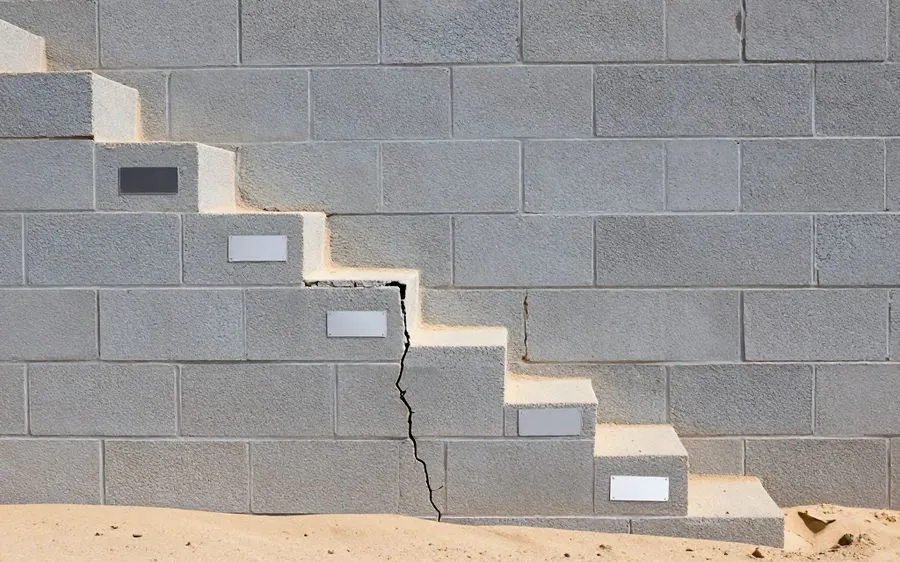
A crack can be ugly without being dangerous, but I would not buy a repair from a photograph alone. On a Phoenix Fence Guide project, I want the owner to have a record of what changed before a contractor sells a method. That keeps a small repair from becoming a disguised rebuild, or a failed wall from getting another cosmetic patch.
The crack is a symptom, not the job
The block is often where you see the failure, not where it started. A crack or lean usually points back to the footing, soil, or water moving around it. If a quote jumps from one look at the wall to “we’ll fill that crack” without saying what caused it, put the quote down.
I watched the same crack get repaired three times by three contractors. None of them looked at the footing. Each patch looked tidy for a while; the wall kept moving because the ground had never been part of the job.
Buy the diagnosis first. It should identify the observed movement, explain what part of the repair addresses it, and say what cannot be known until the footing or adjacent ground is examined. A repair method is not a diagnosis.
The ground rules
Metro Phoenix is a wall-first market, and water still causes trouble in the desert when runoff concentrates along a footing line. Soil movement and water are more often the driver than a defective block.
Structural repair can need approval just as new work can. If excavation is part of the scope, contact Arizona 811 before anyone digs. A leaning wall beside buried utilities is not a good place for guesses.
Reading your own crack
A fine vertical hairline under about 1/16 inch is generally cosmetic, but that is a threshold, not a verdict. A hairline that is longer than it was last year is movement. Photograph it, date the image, and measure the width before deciding it is harmless.
A stair-step crack follows mortar joints rather than cutting straight through the block. That pattern can indicate differential settlement: one portion of the wall or footing has moved differently from the next. A widening crack, a horizontal crack, a bulge, or any visible lean deserves a diagnosis before a patch.
| What you see | Likely meaning | Urgency | Who to call |
|---|---|---|---|
| Fine vertical hairline | May be cosmetic if it stays unchanged | Monitor and document | Masonry professional if it grows |
| Stair-step through joints | Possible differential settlement | Get a diagnosis | Masonry or structural professional |
| Horizontal crack at mid-height | Movement or pressure may be affecting the wall | Prompt assessment | Masonry or structural professional |
| Widening or lengthening crack | Active movement is possible | Do not patch first | Masonry or structural professional |
| Visible lean or bulge | The wall may be losing stability | Urgent assessment | Structural professional and qualified masonry contractor |
| Displaced cap | Movement may have shifted the wall | Assess before resetting it | Qualified masonry contractor |
Diagnose-first algorithm
- Photograph the crack and date the image.
- Measure its width and record where the measurement was taken.
- Check the wall face for lean with a level.
- During a storm, look at where water travels beside and behind the wall.
- Get quotes only after that record exists, and give every bidder the same photographs.
Why it is leaning
A lean is the wall reporting on the ground. The footing may be undersized, undermined by runoff, or disturbed as expansive clay swells and shrinks with moisture. Behind a retaining section, missing drainage can hold water where the wall needs relief. A wall without the reinforcement it needed can have less ability to resist that movement.
Do not let a contractor reduce this to a block problem. I have seen a footing call fail during monsoon weather because I treated runoff as an afterthought. The face of the wall paid for that mistake. If the soil or water path remains unchanged, a straighter-looking face may not stay straight.
For a wall holding back earth, use the separate guidance on when the wall is holding back earth. The drainage design belongs with that problem, not in a quick repair pitch.
The repair ladder
Genuinely cosmetic cracking may be handled with injection or repointing, provided the examination does not show active movement. Damaged individual block can be cut out and replaced when the surrounding wall and footing are sound.
Where movement is active, engineered reinforcement such as wall anchors or helical tiebacks may be part of the scope. That is a response to a diagnosed condition, not a standard add-on. When the footing has failed, a partial or full rebuild may be the honest answer.
Rebuilding a failed section is priced like new construction because it is new construction in that section. It may be worth reviewing what a sound wall is built like before comparing a rebuild scope. Finish-only problems are different; see when the problem is the finish, not the structure.
What moves the price
Start with the diagnosis and the scope, then look at the repair method, access, and affected length. Two bids both labeled “repair” can differ by an order of magnitude because they are quoting different problems. One may cover surface work; the other may examine a footing, remove a failed section, and address the movement that caused it.
I would not compare totals until every bidder has the same photos and the same written problem statement. For a method of reading repair quotes, compare what each quote says it will correct, not just the final number.
Reading the quote
Ask every bidder to identify the cause in writing. Ask whether the footing was examined, what the repair addresses, and what remains outside the scope. If the work is structural or a section is rebuilt, confirm who handles the permit responsibility; city-specific triggers are covered in the fence permit process.
Structural masonry work is licensed, and the classification should match the scope. Verify it through the Arizona Registrar of Contractors rather than accepting a number printed on a quote. Then ask two questions that expose a weak proposal: what will stop this from recurring, and what happens if the wall moves again?
| Quote item | What the bid should state | Why it matters |
|---|---|---|
| Cause in writing | The observed condition and suspected driver | Separates diagnosis from a patch sale |
| Scope | What is removed, repaired, reinforced, or rebuilt | Lets you compare the same work |
| Footing examined | Whether it was inspected and any limits of that inspection | A lean can begin below the block |
| Permit | Who confirms and obtains it when the repair is structural | Structural triggers are city-specific |
| Warranty | What is covered and what conditions void it | A promise is useful only when its limits are written |
Frequently asked questions
Is my block wall crack serious?
It may be serious if its width, shape, or change over time indicates movement. A fine crack under about 1/16 inch is generally cosmetic, but a growing hairline, stair-step pattern, bulge, or lean calls for a diagnosis rather than reassurance.
Why is my wall leaning?
The ground under or behind it is the cause in almost every case. An undersized or undermined footing, soil that moves with moisture, runoff, missing drainage behind a retaining section, or absent reinforcement can all leave the face visibly out of plumb.
Can a leaning wall be straightened?
Sometimes, an engineer-directed reinforcement approach can be part of the repair. Sometimes the failed section has to come out and be rebuilt after the footing problem is addressed; no one can tell you honestly from a distant photo.
Will the crack come back after a patch?
Yes, if the cause was not fixed. A patch can improve the appearance, but it does not stop footing, soil, or water movement on its own.
Do I need a permit to repair a wall?
For structural repair or a rebuilt section, usually. The exact trigger is city-specific, so confirm it with the responsible jurisdiction and make permit responsibility part of the written scope.
Photograph and date the crack today, then get it diagnosed before you get it quoted.
Sources
- Masonry professional guidance - cosmetic-versus-structural crack threshold.
- Arizona Registrar of Contractors, roc.az.gov - licensing for structural masonry work.
- City codes via fence permit process - permit triggers for structural repair.
Last reviewed 2026-07-29.
This page provides general educational information, not a structural assessment, engineering advice, or a certification that a wall is safe. A crack pattern and its width can indicate what to investigate, but they cannot clear a wall without an appropriate on-site evaluation. If a wall is leaning, bulging, displaced, or showing active movement, seek qualified assessment before relying on a cosmetic repair.
Reviewed by Alma Reyes, ICC-certified residential building inspector.
Read next in projects
Adding Height to an Existing Block Wall
What raising an existing block wall in metro Phoenix really involves: the footing calculation, the permit, how new block ties to old, and where it is not allowed.
New Block Wall Installation in Phoenix
What a new block wall in metro Phoenix involves, what drives its price, the permit and engineering triggers, and what a sound quote must spell out.
Chain Link Fence: The Budget Perimeter
How chain link holds up in metro Phoenix, galvanized against vinyl-coated, the pool mesh limit, and why the real constraint is what your community permits.
Want a licensed contractor to call you back?
Leave a number and we pass it to a licensed Arizona contractor. We are not one, we do not bid on the work, and we do not sell your number on.
Request a callback
Send your number to [email protected] with the best time to call and one line about the project. It reaches a person, not an autoresponder, and the page you were reading travels with it so we know what you were pricing.
Advertiser disclosure: this page is free to read because a contractor may pay us for a lead that comes from it. That arrangement never changes what a page says. We publish no contractor names, no rankings and no reviews, and we say plainly when a project is not worth doing.