Chain Link Fence: The Budget Perimeter
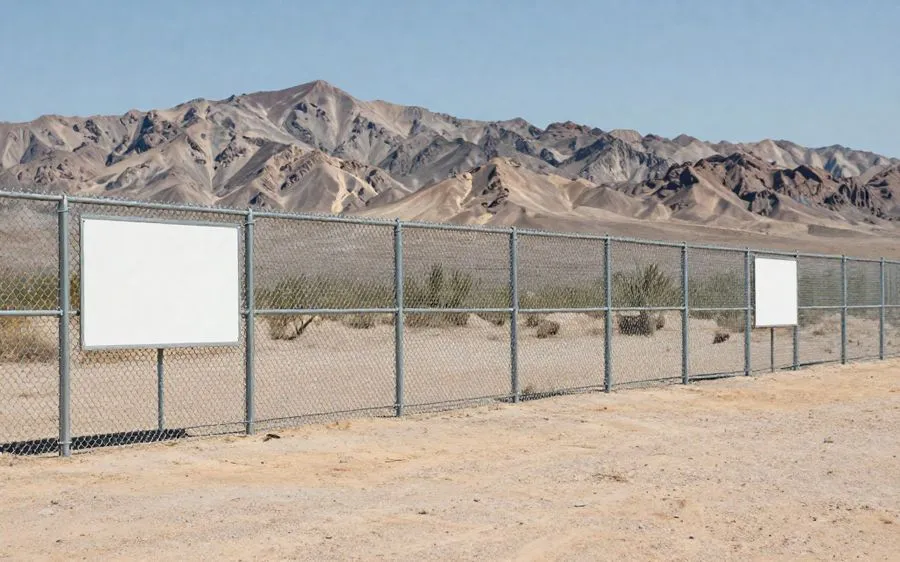
Chain link does an honest job on a big lot, a dog run, or an interior division. It is usually the budget perimeter because the material is functional, visible, and not trying to look like a block wall. In metro Phoenix, its biggest obstacle is rarely heat or upkeep. It is permission.
This page provides general fence-planning information, not a pool-barrier certification or a ruling on your covenant. Confirm site-specific requirements with the city, your HOA, and a licensed contractor before work starts.
The limit is social, not technical
Chain link is one of the tougher, lower-maintenance choices for this climate. The dry heat does not make the fabric delicate, and a straightforward run has fewer finish surfaces to baby than more decorative materials. I would not reject it because somebody calls it industrial. That label describes the look, not whether the fence can do its job.
The catch is the street, not the steel. Many covenant-governed neighborhoods treat visible chain link as an industrial material and do not permit it. Gilbert provides one confirmed municipal example: its code prohibits chain link and woven wire except at construction and recreation sites. That is not a blanket rule for the Valley, but it is enough reason to check before a contractor measures the yard. See the separate guidance on Arizona HOA approval when the covenant is the sticking point.
Permission-first check
Read the covenant clause on permitted fence materials. Then ask the city whether a material prohibition applies on your street. Do both before you take a single quote.
The ground rules
Phoenix is a wall-first market, so a chain-link proposal can look out of place before anyone checks the rules. That is why the approvals come first: confirm the covenant position, then confirm the applicable city requirements. Before digging, make the required utility-locate call.
Posts still decide whether the run stays straight. Fabric cannot rescue posts that were poorly set.
How the job runs
The layout is uncomplicated. Posts are typically set every 8-10 ft, then the fabric is stretched between them. The installer finishes the run with a top rail or tension wire and fits the gates after the line is established.
That sequence makes chain link fast compared with a masonry perimeter, although the calendar still depends on length. A short division and a long lot line are not the same job. When I read a bid, I want to see the post spacing before I care about the sales language.
Galvanized or vinyl-coated
Galvanized chain link is the lower-cost choice and can last a long time here. Commercial estimates commonly put its service life at roughly 20-30 years. Vinyl-coated fabric costs more, is commonly estimated at roughly 25-40 years, and softens the industrial look. Those are commercial estimates, not a promise for a particular installation.
| Factor | Galvanized | Vinyl-coated |
|---|---|---|
| Relative cost | Lower | Higher |
| Service life | Roughly 20-30 years, commercial estimate | Roughly 25-40 years, commercial estimate |
| Appearance | Plain metallic finish | Less industrial appearance |
| Maintenance | Low-demand | Low-demand |
| Usually chosen for | A budget perimeter | A visible run where appearance matters |
I lean toward coated fabric when the fence will be in constant view and the rules allow it. For a large, permitted perimeter, galvanized is often the plainspoken answer.
As a pool fence, there is a limit
Chain link can form part of a pool enclosure only if the mesh opening meets the barrier rule. Arizona law caps the horizontal mesh opening at 1.75 in where the chain link is part of the pool barrier, and the gate has to function as barrier hardware. That mesh limit comes from A.R.S. 36-1681(B)(2).
Do not treat an ordinary yard gate as proof that the enclosure qualifies. The full pool-barrier discussion belongs in pool fence installation and the fence code requirements guide.
What moves the price
Length, height, coating, post work, and gates move a chain-link quote. An added foot of height is commercially estimated to increase cost by about 20-25%, so compare like-for-like heights before deciding one contractor is cheaper. This page does not give price ranges; the point is to make sure a permitted material is being compared on the same scope.
Reading the quote
Ask for the fabric gauge and coating in writing. The quote should also state post spacing and setting, whether it uses top rail or tension wire, the gate hardware, and the mesh size where the fence sits next to a pool.
| Bid item | What to confirm | Why it matters |
|---|---|---|
| Fabric | Gauge and coating | Confirms the material you compared |
| Posts | Spacing and setting | Posts carry the run |
| Support | Top rail or tension wire | Shows how the fabric is held in line |
| Gates | Hardware and operation | A gate is part of the working perimeter |
| Pool-adjacent mesh | Opening size | The pool-barrier cap may apply |
My buyer question would be blunt: is this allowed on my street, and have you checked? A licensed fence contractor should be able to address licensing and the written scope, but neither replaces your own confirmation of the material rule.
FAQ
Is chain link allowed by my HOA?
Often, it is not allowed where it will be visible. Covenants commonly treat it as industrial, and Gilbert’s confirmed code restriction shows why you should not assume material approval from a neighboring city applies to your address.
How long does chain link last here?
Commercial estimates commonly put galvanized chain link at roughly 20-30 years and coated fabric longer. Actual life depends on the installation and exposure, so treat those figures as planning ranges rather than a warranty.
Galvanized or vinyl-coated?
Vinyl-coated costs more, is commonly estimated to last longer, and looks less industrial. Galvanized is the lower-cost option for a permitted run where appearance is not the deciding factor.
Can chain link be a pool fence?
Yes, but only when the pool-barrier requirements are met. Where chain link forms part of the enclosure, the horizontal mesh opening cannot exceed 1.75 in, and the gate must serve as barrier hardware under A.R.S. 36-1681(B)(2).
Confirm it is permitted on your street before you price it. If material choice is still open, compare the specific tradeoffs of vinyl fence and wood fence against the same property rules.
Sources
- A.R.S. 36-1681(B)(2), pool-barrier mesh opening requirement.
- Gilbert Municipal Code 42-110, chain link and woven-wire material prohibition.
- Commercial chain-link service-life sources, used for the stated planning estimates.
Last reviewed 2026-07-29.
Service-life ranges on this page are commercial estimates. Verify material approval, permit needs, utility location, and pool-barrier compliance for your property before installation.
Reviewed by Alma Reyes, ICC-certified residential building inspector.
Read next in projects
Adding Height to an Existing Block Wall
What raising an existing block wall in metro Phoenix really involves: the footing calculation, the permit, how new block ties to old, and where it is not allowed.
New Block Wall Installation in Phoenix
What a new block wall in metro Phoenix involves, what drives its price, the permit and engineering triggers, and what a sound quote must spell out.
Block Wall Repair: Cracks, Lean and Collapse
How to tell a cosmetic crack from a structural one in metro Phoenix, why block walls lean here, the repair options by severity, and what a quote must state.
Want a licensed contractor to call you back?
Leave a number and we pass it to a licensed Arizona contractor. We are not one, we do not bid on the work, and we do not sell your number on.
Request a callback
Send your number to [email protected] with the best time to call and one line about the project. It reaches a person, not an autoresponder, and the page you were reading travels with it so we know what you were pricing.
Advertiser disclosure: this page is free to read because a contractor may pay us for a lead that comes from it. That arrangement never changes what a page says. We publish no contractor names, no rankings and no reviews, and we say plainly when a project is not worth doing.