Stucco or Paint on an Existing Block Wall
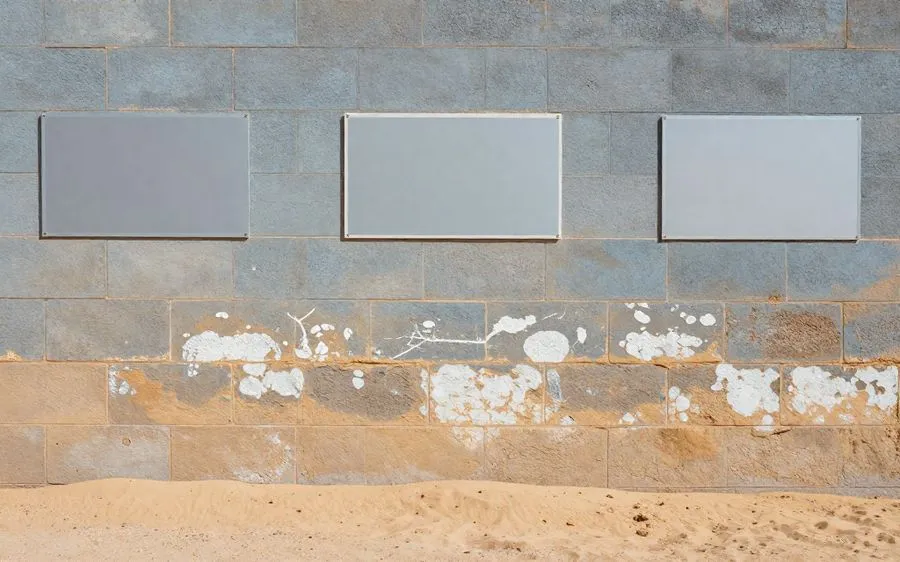
A gray block wall can look like a paint problem right up to the point the new finish starts lifting. In metro Phoenix, the white powder low on the courses is usually the better clue. Find the water before you buy the coating.
The white bloom is the story
That white bloom is efflorescence: salt deposits left as moisture moves through masonry and evaporates. It is not surface dirt you can cover and forget. The water has carried the salts to the face of the block.
I have watched owners scrape it off, roll on paint, and call the wall fixed. Then the coating blistered because the wall was still feeding moisture behind it. Remove the salts, but also find why that patch is getting wet. A coating over either remaining salt or an unaddressed moisture source fails.
The wet test: Wet a small patch of the wall and watch where it dries last. That slower patch is where water is moving, and it is the place the new finish is most likely to fail first.
The ground rules
This is a wall-first job, not decorating. Water drives the failure, so solve that before choosing a finish. A cosmetic finish generally does not need a permit, while structural damage must be repaired first and permitted where required by city codes.
Do not use stucco or paint to make a damaged wall look settled. That is paying twice.
How the job actually runs
Start with an inspection for cracks, white salts, loose material, and the path water is taking. Remove loose material and salt deposits, then rinse the wall. Address the moisture source before repairing cracks or applying a finish.
Only then does the finish choice make sense. Crack repair comes before a parge or stucco coat, or before paint. Parging smooths the surface for appearance; it is not waterproofing. Neither stucco nor paint turns a wet wall into a dry one.
| Factor | Stucco or parge | Paint |
|---|---|---|
| What it changes | Smooths or changes the wall surface | Changes the color and surface appearance |
| Prep needed | Remove salts, loose material, and solve moisture first | Remove salts, loose material, and solve moisture first |
| What it hides | Can hide minor surface roughness, not active cracking | Can hide color variation, not active cracking |
| Upkeep | Depends on whether moisture was actually corrected | Depends on whether moisture was actually corrected |
For a finish on a new wall, the same sequence begins with a clean, sound surface. Existing walls simply give you more evidence to read.
Cosmetic or structural?
A hairline crack may be a finish repair. Widening cracks, stair-step cracks, or cracks that keep moving are different. Coating those defects hides the evidence rather than correcting it, and I would stop the finish work there. Read the repair page for when the cracking is structural.
What moves the price
This project is priced by surface area in square feet, not by linear feet. The number changes with the wall area, how much prep is needed, whether the moisture source needs correction, one finished side or both, and the number of coats in the scope.
Do not compare it to a fence run by length. A tall wall with both faces included is a different job from one exposed face. Price ranges belong in the block wall cost breakdown, not in a finish quote that has not described the prep.
Reading the quote
Ask for the preparation in writing. If the bid says only “stucco wall” or “paint wall,” it leaves out the part that decides whether the job lasts through two Phoenix summers.
| Quote item | What the bid should say |
|---|---|
| Prep steps named | How loose material is removed and the surface is prepared |
| Salt removal | That efflorescence will be removed before coating |
| Moisture source | Whether the source is identified and what work addresses it |
| Crack repair | Which cracks are repaired before the finish work |
| Product and coats | The finish product and number of coats included |
| Sides | One face or both faces of the wall |
| Exclusions | Work not included, especially moisture correction or structural repair |
My buyer question is simple: “What happens if the efflorescence comes back?” The answer should say what is covered and what first has to be corrected. For the longer finish-versus-bare-wall comparison, see stucco versus bare block.
FAQ
What is the white powder on my block wall?
It is efflorescence, salts carried to the surface by moisture moving through the block. Brush-off alone does not solve the moisture path that produced it.
Can I just paint over it?
No, not until the salts are removed and the water issue is addressed. Paint over active efflorescence can blister or release because the wall remains wet behind the coating.
Stucco or paint?
Choose based on the appearance and upkeep you want after preparation is complete. Neither choice strengthens the wall or changes an unresolved moisture problem.
Will the cracks come back?
Yes, if the cracks are structural, and paint can hide the evidence. Do not coat widening, stair-step, or moving cracks before they are evaluated and repaired.
Find the water before you buy the coating.
Sources
- Masonry and coatings practice - efflorescence, parging, and preparation sequencing.
- City codes - cosmetic finish permits and structural repair where required.
Last reviewed 2026-07-29.
This page covers finish preparation, not structural diagnosis, waterproofing, or permit advice for a particular property. Confirm local requirements and have moving or stair-step cracking assessed before coating the wall.
Read next in projects
Adding Height to an Existing Block Wall
What raising an existing block wall in metro Phoenix really involves: the footing calculation, the permit, how new block ties to old, and where it is not allowed.
New Block Wall Installation in Phoenix
What a new block wall in metro Phoenix involves, what drives its price, the permit and engineering triggers, and what a sound quote must spell out.
Block Wall Repair: Cracks, Lean and Collapse
How to tell a cosmetic crack from a structural one in metro Phoenix, why block walls lean here, the repair options by severity, and what a quote must state.
Want a licensed contractor to call you back?
Leave a number and we pass it to a licensed Arizona contractor. We are not one, we do not bid on the work, and we do not sell your number on.
Request a callback
Send your number to [email protected] with the best time to call and one line about the project. It reaches a person, not an autoresponder, and the page you were reading travels with it so we know what you were pricing.
Advertiser disclosure: this page is free to read because a contractor may pay us for a lead that comes from it. That arrangement never changes what a page says. We publish no contractor names, no rankings and no reviews, and we say plainly when a project is not worth doing.