Stuccoed vs Bare Block
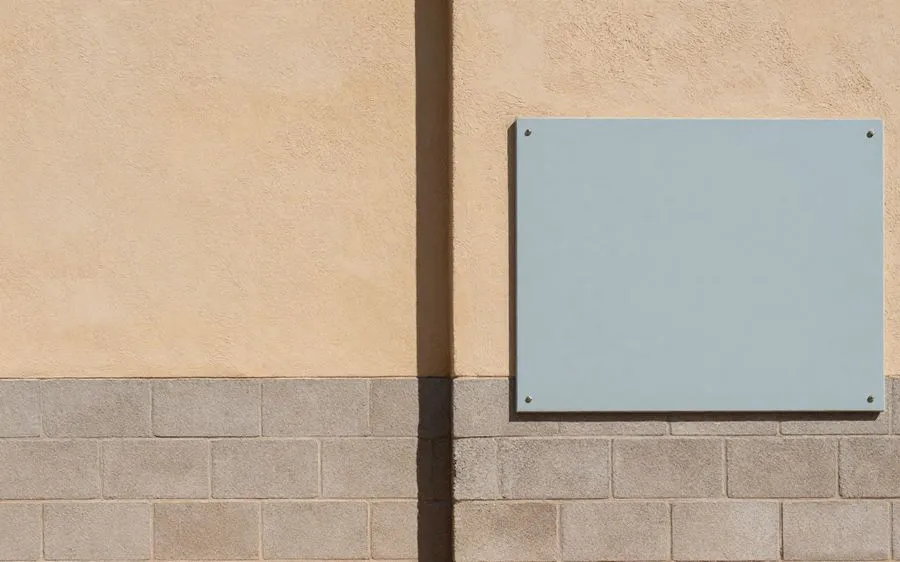
One wall can look like two different jobs. On the left, gray CMU block shows every joint. On the right, the same wall wears stucco and paint. Around Phoenix, that visual split gets dressed up as a technical choice. It is usually not.
The wall underneath is identical
Footing, rebar, grout, and block do the wall’s work. They are the same whether the outside face stays bare or gets a stucco finish. The finished side has not gained a better footing, another course of block, or a different reinforcement plan.
That matters at quote stage. If a bid treats stucco as a structural upgrade, ask which structural item changed and where it appears in the scope. A finish line item can make a wall look more settled and hide minor surface imperfections, but it does not make the masonry stronger or give it a longer structural life.
I used to see homeowners assume the texture was a protective shell. It is an easy assumption because a painted wall looks cared for. But appearance and wall performance are different ledgers. A poorly planned footing remains poorly planned under a handsome finish, and a properly built bare wall remains properly built.
The useful question is simpler: do you want a finished surface badly enough to pay for it now and keep paying for paint later? If the answer is no, bare block is not a lesser wall. It is just an exposed one.
| Criterion | Stuccoed block | Bare block |
|---|---|---|
| Appearance | Finished, painted look that can match a house | Gray, industrial masonry appearance |
| Upfront finish cost | One homeowner reported about $1,400-$1,800 for one side of a 6 ft x 135 ft wall | That homeowner reported painting the same wall for well under $100 |
| Recurring cost | Elastomeric repainting is commonly quoted every 5-8 years | No equivalent finish repaint cycle |
| What it hides | Minor block imperfections and joint texture | Hides nothing; the block remains visible |
| What it does to structure | Nothing | Nothing |
| What a community typically requires | A finished appearance may be required | Acceptance depends on the community’s rules |
How we compare barrier options
The Phoenix Fence Guide comparison method normally weighs the things that change a barrier decision before a homeowner signs a contract. Here, only two axes deserve much attention: upfront cost and the maintenance cycle.
There is no strength column to score because both choices use the same block wall underneath. There is no honest service-life bonus to assign to stucco, either. For the broader material choice that comes before this one, see the decision that comes before this one. This page starts after you have chosen block and are deciding how much of it you want to see.
What the finish costs up front
One homeowner reported spending roughly $1,400-$1,800 to stucco one side of a 6 ft x 135 ft wall. In that same account, painting the bare block came in at well under $100. That is a useful picture of the gap, not a rate card and not a promise for your yard.
It was one report about one wall. Surface area, the condition of the face, prep, and access can move the number. A crew that can work straight down an open side yard is not pricing the same effort as a crew dealing with tight access or a wall that needs more surface attention before the finish goes on.
Do not turn that example into a per-square-foot formula. It cannot carry that weight. Use it to keep the conversation with a contractor honest: the stucco premium is a one-time appearance purchase, and the bare-block option leaves more of the original construction budget alone.
If your quote includes several finish choices, compare it with the work needed to build the wall itself. For the broader wall budget categories, use block wall cost breakdown. I would also separate the finish number from any community requirement. A choice is not really optional when the HOA has already settled it.
What the finish costs forever
The first check is easy to see on a proposal. The repaint clock is the part people forget. Commercial estimates commonly put an elastomeric coat at every 5-8 years, at roughly $2-$4 per square foot. Treat those as planning figures, not a fixed Phoenix price.
Texture makes the paint calculation less friendly. HomeAdvisor cost research is commonly cited for the estimate that stucco texture takes about 50% more paint than a smooth surface. I have learned to put that detail right next to the paint allowance, because a smooth-wall quantity does not travel neatly to a textured wall.
There may also be a full resurface after about 25-40 years, according to commercial estimates. That horizon is long enough that it should not decide a current bid by itself. It does explain why a stuccoed block wall has a maintenance story that bare block does not.
| Year | Stuccoed | Bare |
|---|---|---|
| Install | Finish premium; one homeowner reported about $1,400-$1,800 for one side of a 6 ft x 135 ft wall | No finish premium in that comparison; bare-block paint was reported at well under $100 |
| 6 | A repaint may be due under the commonly quoted 5-8 year elastomeric cycle | No equivalent finish cycle |
| 12 | A second repaint may be due, depending on the interval | No equivalent finish cycle |
| 18 | Another repaint may fall due | No equivalent finish cycle |
| 25 | Repainting continues; commercial estimates also place a possible full resurface around year 25-40 | No equivalent finish cycle |
Planning inputs: the repaint interval, $2-$4 per square foot coating figure, 25-40 year resurface horizon, and roughly 50% extra paint for texture are commercial estimates, not fixed rates. The upfront wall example is one homeowner’s report, not a rate.
Bare block is not maintenance-free masonry in every sense. It just does not create a finish-repainting cycle. If you are already repainting the house for other reasons, the wall may fit naturally into that work. If you hate painting projects, do not pretend you will feel differently in year 12.
The white powder is not a finish problem
White powder on block worries people because it looks like the wall is shedding something. Efflorescence is salt left behind when water moves through masonry. It can show up on bare block and on stuccoed block alike.
Painting over it is a bad bargain. The salts need to be dealt with and the moisture source found before a coating goes on, or the coating fails. That is not evidence for choosing bare block over stucco. It is a moisture symptom asking for attention.
Efflorescence check
What it is: salt deposits carried to the surface by moisture moving through masonry.
What it means: the wall has a water path to investigate; the finish is not the cause.
Do this first: fix the water before you buy the coating, then read how the finish job is actually done, and why prep decides it.
Keep structural crack diagnosis out of a finish decision. If cracking is the concern, read block wall repair rather than treating paint or stucco as a repair.
The verdict, by situation
This is an appearance decision wearing a technical costume. Decide it on the look you want and the maintenance you will accept.
Lowest cost, lowest upkeep, industrial look acceptable
Winner: bare block. You avoid the one-time finish premium and there is no recurring stucco repaint cycle. The tradeoff is plain: every block face and joint stays visible.
Finished look that matches the house
Winner: stucco. It gives the wall the finished, painted appearance many owners want and hides minor block imperfections. Buy it for that look, not because someone said it protects the masonry.
You will repaint anyway, or the community requires it
Winner: stucco, with the cycle budgeted. If a finished wall is required, or if wall repainting is already part of your upkeep plan, the finish can make sense. Check HOA approval in Arizona before assuming bare block is an available choice.
The twelve-year test is the cleanest one. Picture yourself still paying to repaint that wall. If that feels normal because the house and wall need to match, choose stucco. If it feels like a nuisance for a cosmetic difference, leave the block bare.
Frequently asked questions
Does stucco make a block wall stronger?
No. The structural wall is identical either way: the footing, reinforcement, grout, and block do the work. Stucco changes the surface appearance, not the wall’s strength.
Is stucco worth it?
For appearance and matching a house, often. For protection, no. The value is in the finished look and in hiding minor imperfections, balanced against the finish premium and future repainting.
How often does a stuccoed wall need repainting?
Commercial estimates commonly quote an elastomeric coat every 5-8 years. The cost is often estimated at roughly $2-$4 per square foot, and textured stucco may use about 50% more paint than a smooth surface. Get a current local quote instead of treating those figures as a guarantee.
What is the white powder on my wall?
It is efflorescence: salts carried out by moisture. It is a water problem, not a finish problem, and can appear on either stuccoed or bare block. Address the salts and the moisture source before applying a coating.
Make the twelve-year choice
Decide whether you will still be repainting this wall in twelve years, then choose. This page may contain advertising disclosure where applicable.
Sources
- One homeowner’s forum account of stuccoing one side of a 6 ft x 135 ft wall, used here only as a single reported example.
- Commercial sources for elastomeric repaint intervals, coating costs, and possible resurfacing horizons, used as planning estimates.
- Masonry and coatings practice for efflorescence and the rule to address moisture before coating.
Last reviewed 2026-07-29.
This article compares finish appearance and upkeep for metro Phoenix homeowners. It is not a construction scope, a moisture assessment, or HOA approval advice. Confirm your wall’s requirements and condition before approving work.
Read next in compare
Enter your wall length, height in courses and finish to get the block, mortar, grout and rebar counts plus a low, likely and high cost range you can check.
Block Wall vs Wrought Iron / View Fence
Block wall or view fence in metro Phoenix: what each costs over 20 years, how each handles the sun, and which one wins for your lot and your HOA rules.
Block wall or vinyl and wood in metro Phoenix: what each costs over 20 years, how each handles the sun, and which one wins for your lot and your HOA rules.
Want a licensed contractor to call you back?
Leave a number and we pass it to a licensed Arizona contractor. We are not one, we do not bid on the work, and we do not sell your number on.
Request a callback
Send your number to [email protected] with the best time to call and one line about the project. It reaches a person, not an autoresponder, and the page you were reading travels with it so we know what you were pricing.
Advertiser disclosure: this page is free to read because a contractor may pay us for a lead that comes from it. That arrangement never changes what a page says. We publish no contractor names, no rankings and no reviews, and we say plainly when a project is not worth doing.