Wrought Iron and View Fence Installation
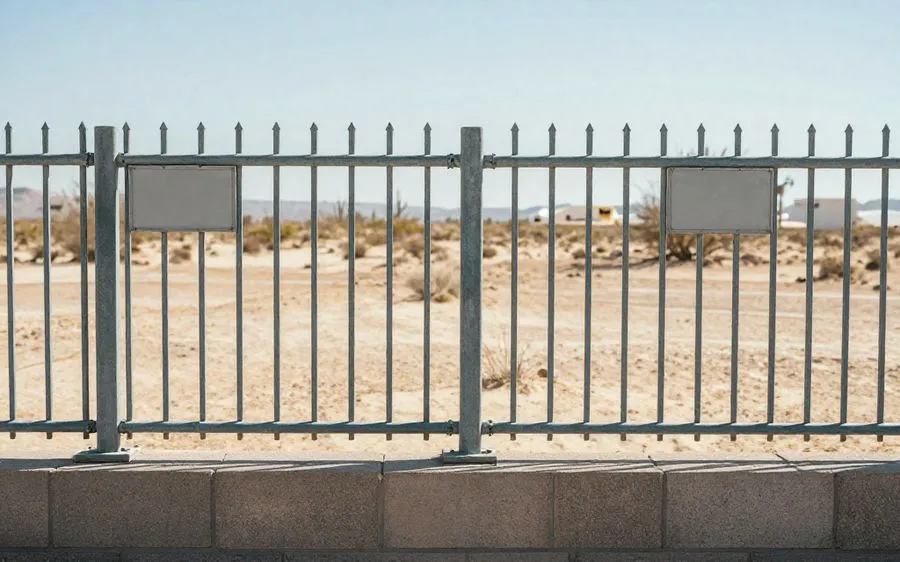
On a Phoenix view lot, the open fence is often the point of the project. You paid for the line of sight across desert, a wash, or a golf course, and a solid wall would throw it away. The catch is that this is one project where your community’s paperwork can matter more than the prettiest panel in a showroom.
This article is general project information, not a determination of your CC&Rs, property line, pool-barrier compliance, or contractor qualifications. Read the recorded documents for your lot and confirm requirements with the appropriate parties before ordering material or starting work.
The community usually picks this fence, not you
Many Valley communities specify the style, color, material, and picket pattern for visible fencing. Some also call for open fencing on street-facing or view-facing elevations. That is why I tell owners to read the CC&Rs before they collect a single quote. Your house may need a dark tubular-steel panel with a particular rail profile, while the neighbor across the street may be allowed a different run because the lots face different common areas.
Get the committee’s approval in writing. A fence can meet city requirements and still have to come down if the community rejects the design. I have watched owners discover that after material was already stacked in the driveway. It is an expensive way to learn that a verbal “should be fine” is not an approval.
For the approval process itself, use the details in Arizona HOA approval guidance. If you are still deciding between an open run and masonry, see the solid alternative rather than treating either option as a universal winner.
Approval-first sequence
- Read the CC&Rs for the lot and elevation in question.
- Get the required style, color, and picket specification from the committee in writing.
- Only then request quotes, giving every bidder the same approved specification so the prices are comparable.
The ground rules
Phoenix is a wall-first market, but an open steel fence still relies on the unglamorous work below grade. Footing and post work decide whether the panels remain straight after wind, gate use, and soil movement. There are two approvals in order: settle the community design first, then handle any applicable local requirements.
Before anyone drills post holes, contact Arizona 811 at least two full working days ahead of the work, as required by Arizona’s excavation-notice law, A.R.S. 40-360.21 through 31. A painted utility mark is cheaper than an argument about a damaged line.
How the job runs
The crew should start by laying out the run and marking the property line. Do not let a panel layout substitute for a boundary check. I once dealt with a wall dispute that began with a crew using a convenient existing feature as the line. Convenient did not make it correct.
Next come the post holes, concrete, and posts. The posts need time for the concrete to cure fully before the panels and gates put load on them. After that, the crew hangs panels, checks each run for level and plumb, and adjusts gates so they swing and latch as intended. The finish gets a final inspection and any damaged areas are touched up.
For a short, simple run, that sequence can move quickly. Longer runs, gates, and more detailed panel styles can stretch the work from days into a couple of weeks. Ask when the crew plans to load the posts, not merely when they plan to set them.
What makes it last here
The metal name alone does not answer the durability question. For steel, ask about tubular wall thickness or gauge, then ask how the coating is applied. A heavier-wall tubular-steel section with a properly applied powder coat is the kind of specification that gives you a fighting chance in hard sun and monsoon humidity.
The welds deserve their own question. Finish failures commonly start where a picket meets a rail, because that is where preparation and coverage can be poor. In my experience, a clean-looking panel can hide a weak weld treatment until the wet season gives it a chance to show itself. That is the area I would inspect closely before the crew leaves.
| Element | What to ask for | Why it matters here |
|---|---|---|
| Wall thickness or gauge | The stated tubular-steel wall thickness or gauge | A lighter section can be a false economy when the run needs to stay rigid. |
| Post size and embedment | Post dimensions, hole depth, and concrete work | Posts and footing support the panels and gate loads. |
| Coating type and process | The powder-coat process and the intended touch-up approach | Sun and moisture test the finish, not just the steel. |
| Weld preparation | How welds are prepared and coated before finish | Welds are a common first place for coating failure and rust. |
| Fasteners | The fastener specification used with the panel system | Small hardware affects how well the assembly stays together. |
Trade estimates commonly put an architectural-grade powder coat at roughly 10-15 years before touch-up, while lower grades may need attention in about 2-3 years. Treat those as estimates, not a promise. A thin finish on a lighter section is cheap only until it is not.
When it is also a pool barrier
An open run can serve as a pool fence only if the entire applicable barrier arrangement meets the rules. Where it encloses a pool, picket spacing must satisfy the 4-inch sphere test under A.R.S. 36-1681(B)(2), and the gate becomes barrier hardware rather than an ordinary yard gate.
That is the headline, not a compliance certification. Read when the run encloses a pool and the site’s fence code requirements before treating a view-fence quote as a pool-barrier design.
What moves the price
Without a settled approved spec, quotes are hard to compare. Total length, panel style and infill, post weight and spacing, finish quality, and gate count all move the number. A community-mandated style can cost more than the panel you would have chosen yourself, and that part is not really negotiable.
Do not ask a bidder to price “wrought iron” in the abstract. Give each bidder the approved drawing or written specification. For cost figures and the parts of a masonry comparison that do not belong here, use block wall cost breakdown and block wall versus view fence.
Reading the quote
This is where vague sales language becomes a problem. The quote should describe what is actually being installed, including steel thickness, posts, concrete, finish work, and gate hardware. If it does not, you cannot tell whether two prices cover the same fence.
| Check before signing | What the quote should state | Buyer question |
|---|---|---|
| Steel | Gauge or wall thickness | What gauge or wall thickness is this tubular steel? |
| Posts and concrete | Post size, hole depth, and concrete scope | How are the posts supported before panels are loaded? |
| Pickets | Picket spacing and approved pattern | Does this match the approved submittal? |
| Finish | Coating type and application process | What finish is being applied, and where? |
| Welds | Weld treatment before coating | What happens at the welds? |
| Gates | Gate hardware and operation | Which hardware is included for each gate? |
| Approval match | The approved style, color, and picket specification | Is every listed panel the approved design? |
If fabrication is part of the job, verify that the contractor holds the appropriate Arizona license and ornamental-metals classification through the Arizona Registrar of Contractors. The license check will not choose a good fence for you, but it is a basic screen. For a pedestrian opening that needs its own planning, see walk gate options.
Frequently asked questions
Will my community approve this style?
Assume the community has an opinion and get it in writing before you order. Many Valley communities set visible-fence standards, but your CC&Rs and committee approval control your lot’s answer.
Steel or aluminum?
Both are used, but the durable choice is about section thickness and coating rather than the metal’s name. Ask the bidder to put the actual section and finish specification in the quote.
Does a view fence rust here?
It can rust at the welds first if they were not prepared and coated properly. Inspect the weld treatment and ask how damaged finish will be handled.
Can a view fence be my pool fence?
Yes, if the spacing and gate hardware meet the barrier requirements. Do not assume a normal view-fence panel is compliant just because it looks open and secure.
How long does the finish last?
Architectural-grade powder coat is commonly quoted at about 10-15 years to first touch-up. Lower grades can need attention much sooner, sometimes around 2-3 years, so confirm the coating specification rather than relying on the label alone.
Get the style and color approved in writing, then take quotes on that exact specification.
Sources
- Commercial Arizona fence sources - covenant patterns and coating-life estimates, treated as unverified ranges.
- A.R.S. 36-1681(B)(2) - pool-barrier sphere-test requirement, discussed in fence code requirements.
- Arizona Registrar of Contractors, roc.az.gov - contractor licensing and ornamental-metals classifications.
Last reviewed 2026-07-29.
Community documents, site conditions, and project details vary. Confirm the approved design, property-line information, excavation notices, and any pool-barrier requirements for your own installation before work begins.
Read next in projects
Adding Height to an Existing Block Wall
What raising an existing block wall in metro Phoenix really involves: the footing calculation, the permit, how new block ties to old, and where it is not allowed.
New Block Wall Installation in Phoenix
What a new block wall in metro Phoenix involves, what drives its price, the permit and engineering triggers, and what a sound quote must spell out.
Block Wall Repair: Cracks, Lean and Collapse
How to tell a cosmetic crack from a structural one in metro Phoenix, why block walls lean here, the repair options by severity, and what a quote must state.
Want a licensed contractor to call you back?
Leave a number and we pass it to a licensed Arizona contractor. We are not one, we do not bid on the work, and we do not sell your number on.
Request a callback
Send your number to [email protected] with the best time to call and one line about the project. It reaches a person, not an autoresponder, and the page you were reading travels with it so we know what you were pricing.
Advertiser disclosure: this page is free to read because a contractor may pay us for a lead that comes from it. That arrangement never changes what a page says. We publish no contractor names, no rankings and no reviews, and we say plainly when a project is not worth doing.