Gate Openers and Automation: The Safety Layer
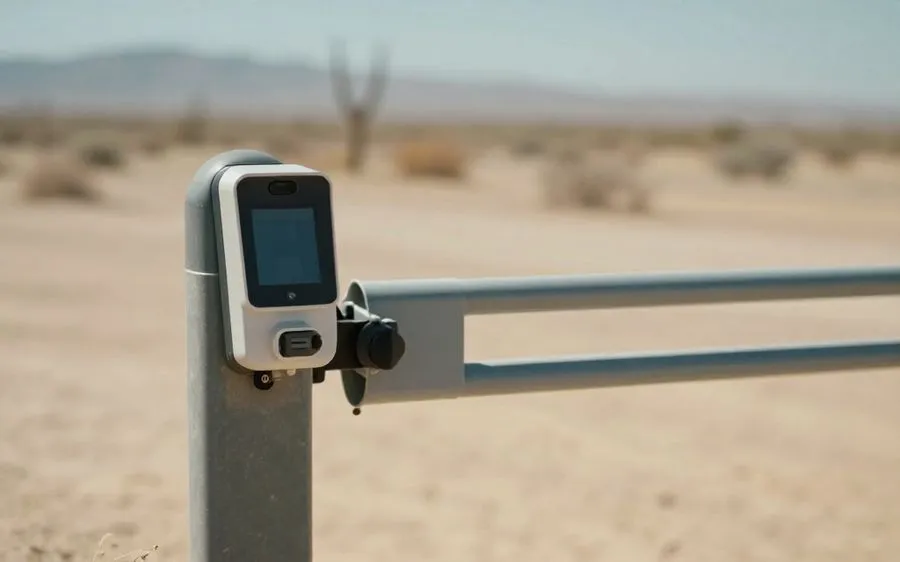
Most gate-opener shopping starts with horsepower and ends with a motor price. That is backward. A driveway gate operator is a machine that moves a heavy leaf through a place where people, pets, and vehicles pass. On Phoenix Fence Guide, I would start with the reversing system, then ask what will move the gate.
This article covers safety and planning information, not a site-specific installation design or permit determination. Have a qualified gate-automation installer assess the gate and safety devices, and verify electrical permit requirements with your city before hardwiring an operator.
An operator is a machine that can trap someone
The gate does not know the difference between a car bumper, a child, or a person standing in a closing path. That is why monitored entrapment protection is required, not an option a salesman can remove to make a quote look better. UL 325 governs that requirement for gate operators.
I have seen buyers treat the photo-eyes as accessories because the motor was the expensive-looking box. That is the wrong comparison. You are buying a machine with a reversing system attached, and without that system you have bought the dangerous half of it.
An operator needs to stop and reverse when it encounters a person or object. The consequence of getting that wrong is injury. The safety layer deserves the first line of the bid, ahead of remote controls and decorative keypad choices.
The ground rules
Phoenix work is usually wall-first: settle the wall, gate opening, and HOA approval before ordering automation. A motor cannot correct a gate leaf that binds or a post set in the wrong place.
If power or low-voltage wiring must cross a yard, call 811 before anything is trenched. Put approvals in order, then decide on power. I once had to untangle a project where the wall had been set to the wrong setback; adding equipment to a bad layout only makes the correction cost more.
What the safety standard asks for
Monitored entrapment protection uses devices such as photo-eyes and contact edges, with guards and physical stops completing the system. A photo-eye watches the opening; a contact edge responds when the moving gate touches something. Monitored means the operator will not run if a required sensor is absent or has failed. That is the point, not a nuisance feature.
Protect pinch points and reach-through areas as well. DASMA gate-system safety guidance recommends guards that keep vertical-bar gaps under roughly 2 1/4 inches where someone could reach through. It also calls for access-control devices to be mounted at least 6 feet beyond the gate, so a user cannot reach a control from inside the gate’s path. Treat that distance as a recommended layout check for your installer, not a substitute for a site review.
Stops matter because the leaf needs a controlled end of travel. Guards matter because a sensor alone does not erase every place a hand can enter. The safety equipment must suit the gate the operator has to move, including its path and hardware.
Solar or hardwired
Distance to usable power is the first honest question. Solar can make sense on a deep Phoenix lot where a long power run would mean disruptive trenching. It is not automatically the better choice because the sun is strong. Gate weight, daily cycles, and battery capacity decide whether the system can keep up.
Hardwired power is a better fit when the gate cycles heavily and a practical power route exists. It also brings an electrical permit into scope, so check the city requirement for the address. Mains power belongs with a licensed electrician, as reflected in Arizona Registrar of Contractors licensing guidance.
| Factor | Solar | Hardwired |
|---|---|---|
| Distance to power | Useful when the existing power run is long | Best where usable power is already practical |
| Duty cycle | Battery capacity must match expected cycles | Better suited to heavier cycling |
| Trenching and permit | Can avoid a long power trench | Trenching may be needed; electrical permit generally applies |
| Power-outage behavior | Depends on stored battery power | Needs a manual release during an outage |
| Maintenance | Panel and battery need attention | Power connection and safety system still need testing |
For an RV opening, start by understanding the heaviest leaf on most lots before choosing a power source. I have not seen sunlight solve a gate that simply cycles beyond the battery plan.
What moves the price
Price follows the operator type, number of leaves, monitored entrapment devices, access-control units, and whether mains power must be trenched. A two-leaf arrangement has more moving parts to specify than one leaf. Long trenching can change the job more than the operator housing does.
Do not cut the sensor line to save money. Compare the actual figures in gate automation pricing only after the safety parts are named, because an inexpensive quote that omits them is not comparable.
Why DIY automation is the wrong saving
Some owners can physically bolt a kit to a gate. That does not make a DIY installation appropriate. The parts skipped most often are the monitored sensors, guards, and stops, which are exactly the parts that prevent a moving gate from becoming a hazard.
Use a qualified gate-automation installer for fitting and commissioning. Use a licensed electrician for hardwired power. A monsoon failure I watched came back to a footing decision I had made, and it was a good reminder that a working mechanism can still be a bad installation. Automation gives you even less room for that kind of mistake.
Reading the quote
Ask the bidder to make the safety system visible. If a line item merely says “opener package,” you cannot tell what is missing. The quote should also state how the system will be tested at handover and what warranty applies.
| Bid item | What to require on the quote |
|---|---|
| Operator | Make and model |
| Entrapment devices | Type and quantity of photo-eyes and contact edges |
| Gate protection | Guards and physical stops |
| Controls | Mounting location and at least 6-foot recommended setback |
| Power | Solar or hardwired source, trenching, and permit responsibility |
| Handover | Commissioning and reversal testing |
| Warranty | Coverage and duration stated plainly |
Two buyer questions do more work than a glossy brochure: “Show me the sensors on this quote” and “Demonstrate the reversal at handover.” If the project also involves the gate layout itself, compare swing and roll gate options separately rather than asking the motor quote to answer a geometry question.
The handover test
At commissioning, break the photo-eye beam while the gate is closing and watch it reverse. Press the contact edge and watch it reverse. Then ask what happens if a sensor is disconnected. The answer should be that the operator stops working.
Frequently asked questions
Are solar gate openers reliable here?
Yes, solar openers can be reliable in metro Phoenix when the duty cycle and battery capacity fit the gate’s use. Sun is not the constraint; a gate that cycles heavily can outrun a poorly planned battery system. Ask the installer to size the power plan for actual expected cycles.
What is entrapment protection?
Entrapment protection is the monitored sensor system that stops and reverses a gate when something is in its path. Photo-eyes and contact edges are common devices, supported by guards and stops. The operator should not run when a required sensor is missing or failed.
Can I fit a gate opener myself?
No, automation should be fitted and commissioned by a qualified gate-automation installer. The motor may look straightforward, but the safety system is where DIY kits fail, and that is the part that can hurt someone. Hardwired power requires a licensed electrician.
What happens in a power cut?
Every operator needs a manual release for a power outage. Ask the installer to show you the release at handover and make sure the people who use the property know where it is. Do not wait for the first outage to find it.
Do I need a permit for a gate opener?
For hardwired power, an electrical permit generally applies. Verify the requirement with the city that governs your address because permit administration is city-specific. Solar does not remove the need for a safe, properly commissioned gate system.
Before you compare prices, ask for the entrapment devices to be listed on the quote.
Sources
- UL 325 - gate-operator safety standard governing monitored entrapment protection.
- DASMA gate-system safety guidance - devices, guards, stops, and control-mounting distance.
- Arizona Registrar of Contractors, roc.az.gov - installer and electrical licensing guidance.
Last reviewed 2026-07-29.
This is general safety information, not an installation design, electrical advice, or a city-specific permit ruling. Confirm the equipment, safety layout, and permit requirements for your property with qualified local professionals and the applicable city.
Reviewed by Alma Reyes, ICC-certified residential building inspector.
Read next in projects
Adding Height to an Existing Block Wall
What raising an existing block wall in metro Phoenix really involves: the footing calculation, the permit, how new block ties to old, and where it is not allowed.
New Block Wall Installation in Phoenix
What a new block wall in metro Phoenix involves, what drives its price, the permit and engineering triggers, and what a sound quote must spell out.
Block Wall Repair: Cracks, Lean and Collapse
How to tell a cosmetic crack from a structural one in metro Phoenix, why block walls lean here, the repair options by severity, and what a quote must state.
Want a licensed contractor to call you back?
Leave a number and we pass it to a licensed Arizona contractor. We are not one, we do not bid on the work, and we do not sell your number on.
Request a callback
Send your number to [email protected] with the best time to call and one line about the project. It reaches a person, not an autoresponder, and the page you were reading travels with it so we know what you were pricing.
Advertiser disclosure: this page is free to read because a contractor may pay us for a lead that comes from it. That arrangement never changes what a page says. We publish no contractor names, no rankings and no reviews, and we say plainly when a project is not worth doing.