Vinyl Fence in Desert Sun
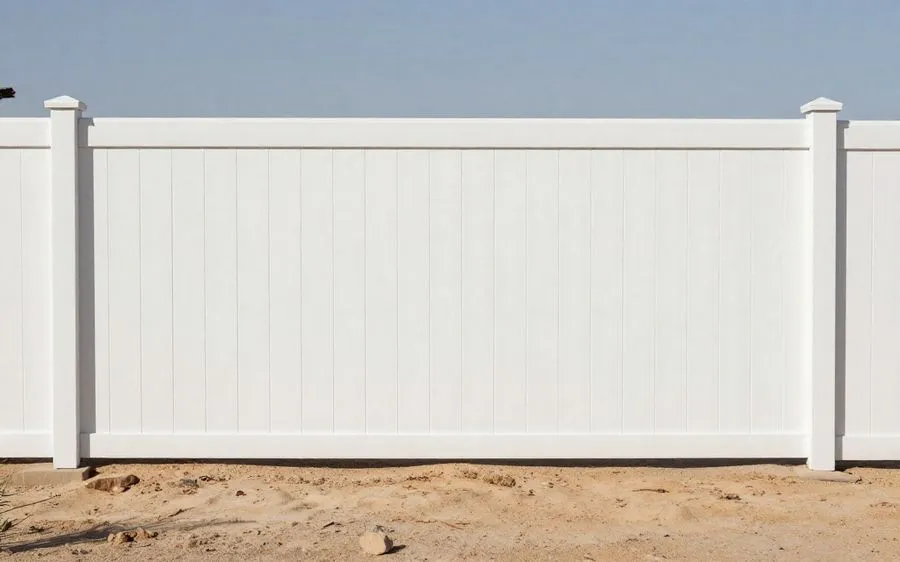
Vinyl is not automatically a bad choice in metro Phoenix. I have seen it work, but only when the quote spells out a desert-rated panel and an installation that lets the material move. A clean white fence can still be the wrong purchase if the seller treats all PVC as the same product.
Grade is the whole question
Sun is the test. PVC lives under sustained UV here, and the difference between a fence that remains useful and one that turns brittle is usually the panel grade, not the profile or the sales brochure.
Commercial estimates put desert-rated vinyl at roughly 10-15 years, while standard-grade material may reach only about 5-7 years before UV embrittlement becomes a concern. Those are broad commercial estimates, not promises. Grade and maintenance matter.
Ask what the manufacturer uses for UV protection and how thick the panel walls are. Titanium dioxide and thicker walls are specifications worth asking about, not a magic label. Budget vinyl in full Phoenix sun is a false economy when the lower quote quietly omits both details.
| What to ask | Budget grade | Desert-rated grade |
|---|---|---|
| Wall thickness | Often not stated | Stated in the quote or product specification |
| UV package | May be vague | UV inhibitor specification is identified |
| Color stability | Less confidence in hard sun | Better support for sustained UV exposure |
| Expected life | About 5-7 years, commercial estimate | About 10-15 years, commercial estimate |
| Warranty terms | Read exclusions closely | Read UV and discoloration exclusions closely |
The ground rules
Phoenix is still a wall-first market. For a fence, the posts and footings decide as much as the panels do. Start with the community approval if one applies, then the needed local approval, and call for utility locates before anybody digs. I have seen a good-looking run made useless by a bad footing call.
Installed so it can move
The afternoon heat is not a minor detail. Vinyl expands and contracts through large daily temperature swings, so the system needs room to move instead of being pinned tight at every connection.
Fasteners should not be over-driven. Panels need the movement allowance required by their system. When an installer makes a vinyl fence rigid because it looks neat on day one, the material can buckle as temperatures cycle. That is an installation failure, not proof that every vinyl panel fails here.
Look at the post setting, too. A panel cannot compensate for a loose post or a footing that was treated as an afterthought. I would rather see a plain quote that states the setting method than a glossy one that says nothing useful.
Your community may decide it for you
Many Valley communities restrict or prohibit vinyl as a visible material. Read your CC&Rs before you price a fence, because the acceptable color, height, and material may already be set by the community. The Arizona HOA approval guide is where I would start on that question.
Do not assume a neighbor’s fence answers it. Rules change, exceptions happen, and an older installation may not reflect what the association approves now.
What moves the price
Length, height, panel grade, and posts move the quote. The grade difference is often exactly where the cheap bid found its savings, so comparing two totals without comparing the panel specification tells you very little.
For the lifecycle tradeoff against masonry or wood, see block wall versus vinyl and wood. If vinyl is not approved, wood fence maintenance and chain-link fence options may be more relevant than forcing a material your community will reject. Most of the Valley still builds block wall installations.
Reading the quote
Ask the contractor to identify the panel grade and UV inhibitor, wall thickness, post specification and setting, expansion allowance, color, warranty, and every condition that voids it. Use a licensed fence contractor and confirm the appropriate classification through the Arizona Registrar of Contractors.
| Bid-spec checklist | What the quote should state |
|---|---|
| Panel grade and UV inhibitor | The stated grade and the UV package, not a generic “vinyl” label |
| Wall thickness | A measurable panel-wall specification |
| Posts and setting | Post specification and how each post will be set |
| Expansion allowance | How panels and fasteners retain movement allowance |
| Color | The approved color, especially where CC&Rs apply |
| Warranty | Term, UV or discoloration language, and exclusions |
The two questions that separate the quotes
What is the wall thickness of these panels? Does the warranty exclude UV discoloration? The answers usually explain the price difference entirely.
Frequently asked questions
Does vinyl fence last in Arizona?
At a desert-rated grade, vinyl may last roughly a decade or more; at budget grade, considerably less. Those lifespan figures are commercial estimates with wide variation by grade and maintenance.
Why does vinyl crack in the sun?
UV can break down the polymer while heat cycles the panels. A rigid installation adds stress when the material has no room to expand and contract.
Is vinyl maintenance-free?
No. It does not need staining, which is different from lasting forever or needing no attention to its posts, panels, and warranty conditions.
Will my HOA allow vinyl?
Many communities restrict vinyl as a visible material. Ask before pricing and read the current CC&Rs rather than relying on a broad Valley rule.
Ask for the wall thickness and the UV clause before you compare prices.
Sources
- Trade and commercial sources on desert vinyl lifespan and UV packages, flagged commercial estimates.
- Arizona Registrar of Contractors, contractor classification information.
Last reviewed 2026-07-29.
Lifespan figures are commercial estimates with wide variation by panel grade and maintenance. Confirm community rules, product specifications, warranty exclusions, and contractor licensing before signing a fence contract.
Read next in projects
Adding Height to an Existing Block Wall
What raising an existing block wall in metro Phoenix really involves: the footing calculation, the permit, how new block ties to old, and where it is not allowed.
New Block Wall Installation in Phoenix
What a new block wall in metro Phoenix involves, what drives its price, the permit and engineering triggers, and what a sound quote must spell out.
Block Wall Repair: Cracks, Lean and Collapse
How to tell a cosmetic crack from a structural one in metro Phoenix, why block walls lean here, the repair options by severity, and what a quote must state.
Want a licensed contractor to call you back?
Leave a number and we pass it to a licensed Arizona contractor. We are not one, we do not bid on the work, and we do not sell your number on.
Request a callback
Send your number to [email protected] with the best time to call and one line about the project. It reaches a person, not an autoresponder, and the page you were reading travels with it so we know what you were pricing.
Advertiser disclosure: this page is free to read because a contractor may pay us for a lead that comes from it. That arrangement never changes what a page says. We publish no contractor names, no rankings and no reviews, and we say plainly when a project is not worth doing.