Blocking a Two-Story Neighbor's View, Legally
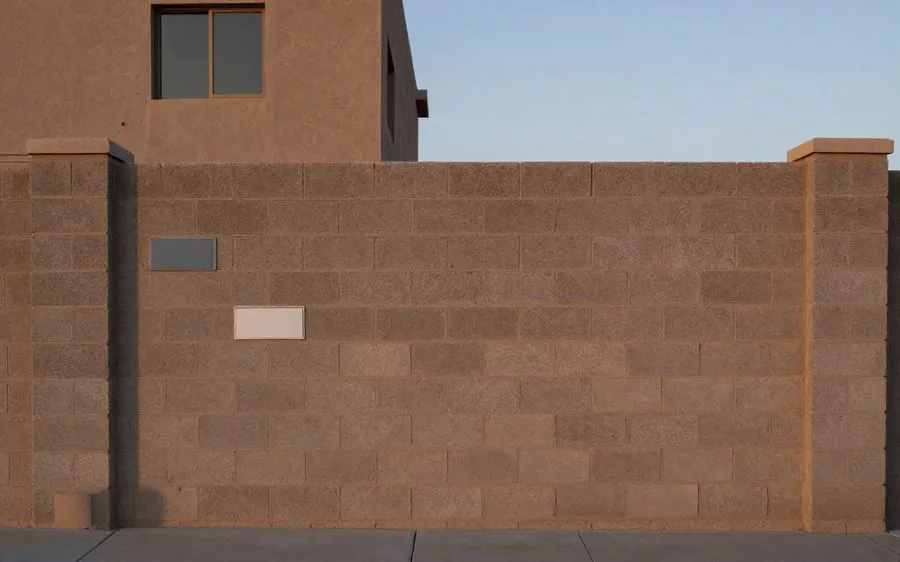
A privacy wall can be money well spent. It can also be nine more courses of block that leave the upstairs window looking straight into your patio. I wrote bids for walls around the East Valley for eleven years, and I would rather tell you that before you price a wall that changes nothing.
This page is general information, not zoning, engineering, or HOA approval advice. Confirm the applicable city requirements and your community’s written approval before you build or alter a boundary wall.
Why six feet does not solve this
Six feet blocks a ground-level sightline. It does not automatically block a sightline from an upstairs window or upper deck. The geometry is simple: as the viewer gets higher, a barrier has to stand farther from that viewer or rise higher before it cuts the same line of sight. A wall on the property line may hide a seated person from a neighbor’s patio while doing little for the second-story bedroom above it.
I have seen homeowners start with a height number before checking the angle. That is backward. Stand where you actually use the yard, then judge the line from the window, not from the neighbor’s ground floor. A wall is a blunt tool against an elevated view.
Sightline test - do this before requesting a quote
- Stand where you actually sit, cook, or use the yard.
- Have someone stand at the neighbor’s window or as close to that viewing point as access allows.
- Hold a string at your proposed wall or screen height and look at what the string would cut.
Ten minutes with a string can keep you from buying a wall that misses the problem.
The ground rules
In metro Phoenix, the wall is often the first answer, but the footing decides whether it lasts through hard weather. I once made the wrong footing call before a monsoon and paid for the lesson when the wall failed. Start with city approval, then community approval, in that order. Call for utility locating before anyone digs.
How tall you can legally go
Your city zoning rules set the height cap, and those caps vary across the metro. Use the city-specific guidance in wall height and setback rules instead of assuming a number from a nearby neighborhood applies to your lot.
For CMU walls 6 inches thick or more, a wall above 7 feet enters stamped-engineering territory under Maricopa County DD-5012-01, revised May 4, 2026. That is not a detail to settle after the block arrives. A wall built over the applicable cap without a permit can be removable at the owner’s cost under the relevant city code.
Your community can set a lower cap or control materials even when the city would allow more. Read Arizona HOA approval requirements before you design. I recommend asking for written approval, not relying on a conversation at a meeting.
What actually works instead
The best answer is usually a combination, not maximum height. Plantings positioned to interrupt the angle can screen a higher view where a boundary wall cannot. Their mature dimensions matter more than their size on installation day. A privacy screen or lattice may work where it stays within the applicable height rules and receives any required approval.
Repositioning a table, seating area, or other yard use can cost less than changing a wall. Shade structures can also block the angle over the area you use without pretending to solve the entire property line. I would rank a solution by the specific place you need privacy, not by how tall it looks from the street.
| Option | What it blocks | Height rules it must satisfy | Relative cost | How quickly it works |
|---|---|---|---|---|
| Taller engineered wall | Close-to-level sightlines | City cap, permit, engineering, and community rules | Highest | After approval and construction |
| Wall plus plantings | Wall-level and selected elevated angles | Wall rules plus applicable planting rules | Moderate | Wall is immediate; planting changes over time |
| Privacy screen or lattice | Targeted views through or above a wall | Applicable height and community rules | Lower than an engineered wall | After approval and installation |
| Plantings alone | Selected elevated angles | Applicable planting and community rules | Lower | Changes as plants mature |
| Repositioning the use of the yard | Privacy where you sit or gather | No boundary-height increase | Lowest | Immediate once rearranged |
When a taller wall is the right answer
There are cases for a taller wall. If the sightline is close to level, the lot gives the wall enough distance from the viewer, and both the city and community approve it, an engineered wall can do the job. Then look at what raising the wall you have would involve or building new to the maximum legal height.
Do not treat an extension as a decorative add-on. The existing wall and the approval path still matter.
What moves the price
An engineered over-height wall is the most expensive and most-permitted path. Screens and plantings are usually cheaper and often faster, while repositioning the yard may require no boundary work at all. I do not use a price number here because the right solution changes the scope before anyone can give a useful figure.
Reading the quote
Ask the bidder to stand where you stand and tell you what the proposed work blocks. If the answer is just a finished height, the quote is not solving the sightline.
| Check before signing | What the quote should state |
|---|---|
| Finished height | The proposed finished height measured against the applicable city cap |
| Engineering | Whether stamped engineering is required for the wall scope |
| Community approval | The approval needed before work begins |
| Mature dimensions | For planting or screening, the eventual height and spread being relied on |
For a screen-focused project, view fence installation may be the more useful next comparison. Keep the scope tied to the angle you tested, not to a generic promise of privacy.
Frequently asked questions
How tall can a privacy wall be?
It is set by your city and may be capped lower by your community. Above 7 feet, a CMU wall 6 inches thick or more needs stamped engineering under the cited county standard.
Will a taller wall block my neighbor’s upstairs window?
Often it will not. Run the sightline test in this article first, because it takes about ten minutes and shows what a proposed height would actually cut.
Can my community stop me?
Your community can cap the height and control the material. Ask for approval before design, since city compliance does not replace the community’s review.
What blocks an elevated view best?
Usually a combination of modest height plus planting or a screen at the right distance works best. The exact mix depends on the viewing angle and what the applicable rules allow.
What if I build over the cap anyway?
It can be removable at your cost. The city does not negotiate that consequence after the wall is built.
Run the sightline test first. It decides which of these projects is even worth quoting.
Sources
- Maricopa County DD-5012-01, revised May 4, 2026 - engineer-seal threshold for walls above 7 feet.
- City zoning height caps, summarized in wall height and setback rules.
- A.R.S. Title 33, Chapter 16, summarized in Arizona HOA approval requirements.
Last reviewed 2026-07-29.
This article is not a substitute for city zoning review, stamped engineering when required, or written HOA approval. Verify the rules that apply to your property before committing to a wall, screen, or planting plan.
Reviewed by Alma Reyes, ICC-certified residential building inspector.
Read next in projects
Adding Height to an Existing Block Wall
What raising an existing block wall in metro Phoenix really involves: the footing calculation, the permit, how new block ties to old, and where it is not allowed.
New Block Wall Installation in Phoenix
What a new block wall in metro Phoenix involves, what drives its price, the permit and engineering triggers, and what a sound quote must spell out.
Block Wall Repair: Cracks, Lean and Collapse
How to tell a cosmetic crack from a structural one in metro Phoenix, why block walls lean here, the repair options by severity, and what a quote must state.
Want a licensed contractor to call you back?
Leave a number and we pass it to a licensed Arizona contractor. We are not one, we do not bid on the work, and we do not sell your number on.
Request a callback
Send your number to [email protected] with the best time to call and one line about the project. It reaches a person, not an autoresponder, and the page you were reading travels with it so we know what you were pricing.
Advertiser disclosure: this page is free to read because a contractor may pay us for a lead that comes from it. That arrangement never changes what a page says. We publish no contractor names, no rankings and no reviews, and we say plainly when a project is not worth doing.